Blog

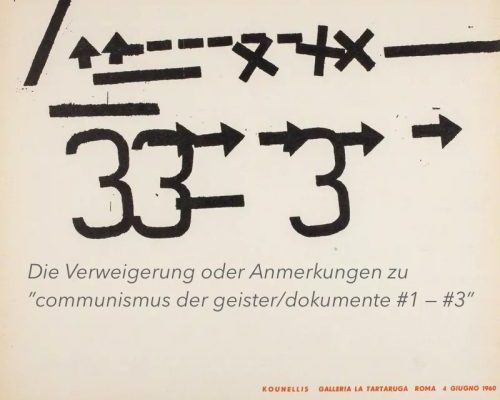
Peter Bouscheljong | Die Verweigerung oder Anmerkungen zu “communismus der geister/dokumente #1 – #3”

  1 A Lass die Welt zugrunde gehen [M. Duras // press kit, Les Films Molière, 1977, fonds Jean-Pierre Joncolas, archives de la Section d’histoire et esthétique du cinéma, Université de Lausanne]. Man muss die Kraft zur totalen Kritik, zur Verweigerung, zur verzweifelt sinnlosen Anklage aufbringen. Es gibt keine politische Lösung, die uns wesentlich berücksichtigen würde. 1 B Zwecklos noch an ein planetarisches, ökologisches Gleichgewicht zu glauben. Weil uns ein falsches Denken und Verständnis im Wege steht. 1 C Machen wir uns nichts vor. Man muss den Mut besitzen, an nichts zu glauben. Sich frei machen von jeder Form von…

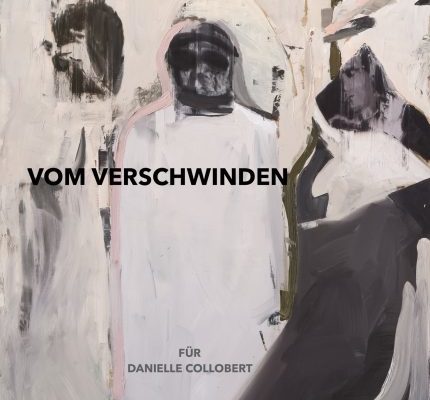
Peter Bouscheljong | Vom Verschwinden. Für Danielle Collobert

  Es wird nie wieder eine Rückkehr geben – nur noch Durchgänge – einen Durchgang!… ////////////////////////////////// Danielle Collobert: Œuvres II, Textes manuscrits laissés inédits   ////////////////////////////////////////// 1 Kennengelernt, so Jean-Pierre Faye, haben wir uns im Mai 1968 im Hôtel de Massa, dem Gründungsort des französischen Schriftstellerverbands. Danielle kam geräuschlos, mit einer Bescheidenheit, die ihrer vollkommenen Gelassenheit entsprach, und sagte, dass sie tippen  könne und uns helfen würde. Sie erwähnte nicht einmal, dass sie schrieb und ein Buch bei Gallimard veröffentlicht hatte… //////////////////////////////////// 2 Man schreibt, um nicht zu ersticken, ein wenig das Luft- Abschnüren hinauszuzögern, die Strangulation. ////////////////////////////////////////////////////////// 3 Als…

Cyril Béghin | Chantal Akerman: A Modern Adventure

Few have noted that Chantal Akerman’s last film No Home Movie and her death in 2015 represented, more than any other work of art or event, the receding of a certain form of cinema and a certain way of thinking about film. While this formal and conceptual approach known as modern cinema has not yet come to an end, its adventurers have become rare; Chantal Akerman was the most singular of them all. For Akerman, ‘modern’ was probably not a rallying cry, but simply a word with ambiguous implications, such as when she used it in the first screenplay of Jeanne Dielman, 23,…

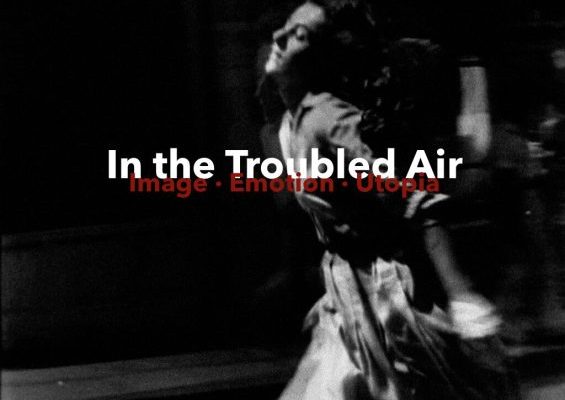
Georges Didi-Huberman | In the Troubled Air…

Curated by French thinker Georges Didi-Huberman, the exhibition “In the troubled air…” sets forth a political anthropology of emotion in a poetic tone, sketching channels of respiration and resistance to confront the persuasive culture of capitalism which has filtered into everything. The title, taken from Federico García Lorca’s Romancero gitano (Gypsy Ballads), invokes emotion that flows beyond and is not constricted to one sole subject, where the Lorcian idea of “duende” (a state of heightened emotion or expression) comes into play. Where emotion is understood here as a movement transmitted to collectiveness via a unique body, one that is predisposed to develop into a…

Peter Bouscheljong | Katerina Gogou, Poems 1978-2002

 Published in Lana Turner | A Journal of Poetry and Opinion no.14 What I’m afraid of most of all is lest I become a “poet.” After the publication of her first book, Three Clicks Left (1978) — which went through numerous editions in a short time and sold over 40,000 copies, something only Yannis Ritsos or Odysseus Elytis had previously managed to do — the Greek anarchist poet Katerina Gogou (1940-1993) became the object of police surveillance. Her apartment was searched several times over the years. At demonstrations, she was openly threatened and repeatedly arrested. Three Clicks Left describes the…

reading list [6/2025]

  Leslie Kaplan | Miss Nobody Knows Chantal Akerman | Eine Familie in Brüssel Jean Daive | Antonio Gramsci Jean Daive | Le Nœud EDITION RETOUCHES / ÄNDERUNGSSCHREIBEREI N°1 & N°2  Georg Wiesing-Brandes | Walter Benjamin. Das Pariser Adressbuch Lectura Dantis. Zeitgenössische Dichtung im Dialog mit Dante Alighieris “Commedia” Stéphane Bouquet | Tout se tient Stéphane Mandelbaum | Katalog. Museum für Moderne Kunst Annie Bourneuf | Im Rücken des Engels der Geschichte Eleanor Careless | Incarceration in the Poetry of Anna Mendelssohn  

Agnès Rouzier | from “Letters to a Dead Writer”

  There is death in life and it astonishes me that people pretend not to know that: death whose pitiless presence we feel in each change we survive, for one must learn how to die slowly. We must learn how to die: there’s our whole life. I am not ashamed, Dear, to have wept, another Sunday, cold and too early, in the gondola that kept turning and turning, passing vaguely outlined neighborhoods that seemed to me to belong to another Venice located in Limbo. And the voice of the barcaiolo asking to be paid at the turning of a canal…

Peter Bouscheljong | parteinahme [ein fragment]

[…] der zustrom unterschiedlicher empfindungen durch das fliessen der worte (über und durch die haut) und die zersplitterungen eines wesens auf ein blatt papier zu übertragen. also verweigert sich die poesie einer repräsentativen logik oder einem solchen verstehen, lässt alle versuche einer klassifizierung in sich zusammenfallen. und man weiss, dass der negationismus zwei ressourcen hat, von denen eine darin besteht, nicht zu sehen, was in der tat nicht mehr sichtbar ist, während die andere darin besteht, den kontext der ereignisse biz zu dem punkt zu entfalten, an dem die besonderheit des verschwindens verschwunden ist.

Karoline Feyertag | The Art of Vision and the Ethics of the Gaze. On the Debate on Georges Didi-Huberman’s Book ”Images in Spite of All”

For Didi-Huberman the only thing to be gained from the Medusa myth is that it reveals Perseus’ victorious cunning—he having succeeded with the help of Medusa’s reflection in his shield in decapitating the monster. To survive and to bear witness it is necessary to apply cunning. It is above all necessary to muster the ”courage to gain insight” into a numbing and/or life-threatening reality.

reading list [3/2025]

  Schreibheft. Zeitschrift für Literatur 104: Bjørn Aamodt, Lyn Hejinian, Rosmarie Waldrop Tor Ulven: Grabbeigaben Félix Guattari: 65 Träume von Franz Kafka Gilles Deleuze: Über die Malerei Kim Hyesoon: Autobiographie des Todes Furio Jesi: Spartakus. Symbologie der Revolte Ernesto García López: Hospital del aire Jan Pieter Barbian: Literaturpolitik im NS-Staat Volker Pantenburg: Einfachheit ohne Vereinfachung. Zur Praxis Harun Farockis Léon Poliakov: Vom Hass zum Genozid. Das Dritte Reich und die Juden Galina Rymbu: Meine Vagina Perrine Le Querrec: Soudain Nijinski

Books of 2024

Leslie Kaplan | The Book of Skies  Hélène Giannecchini | Alix Cléo Roubaud: a portrait in fragments Chantal Akerman | Œuvre écrite et parlée (3 volumes) Chantal Akerman | Travelling Bernard Eisenschitz | Starting Places. A Conversation with Robert Kramer Thomas Helbig | Film als Form des Denkens. Jean-Luc Godard. Geschichte[n] des Kinos. Pierre Guyotat et l’Algérie | Sous la direction de Catherine Brun, Guillaume Fau et Donatien Grau Patrick Bouchain, Donatien Grau | Pierre Guyotat. La parole visible Jean-Christophe Bailly | Temps réel Miguel Marlon, Elena Vogman (Ed.) | Psychotherapy and Materialism. Essays by François Tosquelles and Jean Oury Antoine Volodine…

My book ‘A Small Poetics of Insurrection’ is out in a Portuguese translation

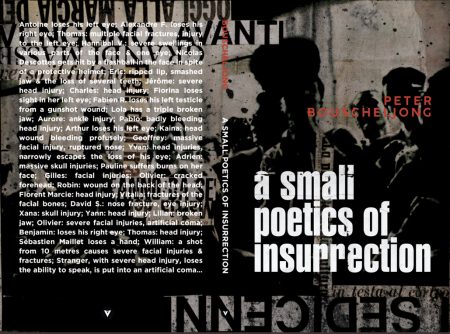
My book ‘A Small Poetics of Insurrection’ (Alienist Manifesto, 2021) is out in a Portuguese translation by António Gregório, published by Barco Bêbado. Cover and graphics by André Lemos and Sara Mealha. PEQUENA POÉTICA DA INSURREIÇÃO de Peter Bouscheljong Barco Bêbado, 2024 “Este é um esboço sobre Dante. Sobre o Dantismo de Peter Weiss e Pasolini. Sobre o Dantismo de Peter Weiss e Pasolini segundo Fredric Jameson. Sobre Dante, que foi libertado da psiquiatria para a emigração e condenado à morte à revelia. Sobre Weiss e Pasolini e a sua fixação obsessiva na Divina Commedia. Sobre os operários insurrectos em…

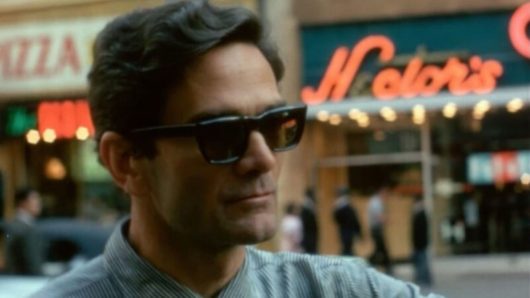
Agnès Varda – Pier Paolo Pasolini – New York – 1967

[…] Agnès Varda: Would you please tell me your definitions of reality and fiction? Pier Paolo Pasolini: There’s no difference between reality and fiction, because cinema is reality expressing itself through itself. In reality, I can photograph a man walking down the street. He’s not aware that he’s being filmed, and this is reality. If  I choose an actor to play that man, then there’s another reality, the actor’s reality. But it’s always reality, it’s never fiction. […] AV: The other day you said you’re a Marxist who is missing faith. PPP: My relationship with religion is so dark, I…

Antoine Volodine | The Fringe of Reality

  I’m actually not talking here under my own name. You should perceive and conceive of Antoine Volodine as a collective author, a name that includes the writings, voices, and poems of many other authors. You should think of my physical presence, in front of this microphone, as that of a delegate whose mandate is to represent the others, my colleagues unable to appear in front of you because they’re mentally distant, because they’re imprisoned, or because they’re dead. You should accept my presence here as a spokesperson. As a spokesperson of post-exoticism, which is to say an imaginary literature…

Voodoo Guerilla: Interview with Elisabeth Perceval and Nicolas Klotz

By Mathilde Girard and Frédéric Neyrat   The margins of cinema Frédéric Neyrat: Let’s start here: What is film’s place, and more specifically your films, in the entertainment industry of a capitalist economy? In other words, who is the enemy these days? Elisabeth Perceval: It’s funny because yesterday morning I was saying to Nicolas… Do you remember? Nicolas Klotz: Yes, I was asking Elisabeth about our place in contemporary French cinema and she was saying that it was like an uncertain love… I found that very beautiful. EP: Uncertainty is just that, a space of possibilities with impossibilities hiding like a…

riots and/or poetics [9/2024]

a kind of counter-history—is that poetry?   Chantal Akerman: Œuvre écrite et parlée Antoine Volodine: Vivre dans le feu Leslie Kaplan: The Book of Skies Éric Baudelaire: Make, Do, With — Film and exhibitions, 2011-2021 Nicolas Klotz, Elisabeth Perceval: les frontières brûlent Heiner Müller Jahrbuch 1 (2024) Christophe Hanna: Gloire Emmanuel Hocquard, Alexandre Delay: Le voyage à Reykjavik Archive of Dreams. Surrealist Impulses, Networks, and Vision Sylvain Courtoux: L’Avant-garde. Tête Brûlée. Pavillon noir Pavel Arsenev: Le russe comme non maternelle Thomas Harlan: Heldenfriedhof

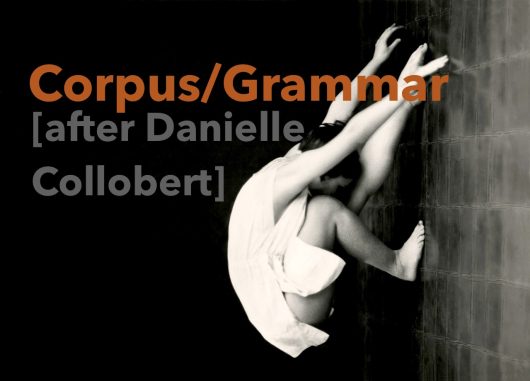
Peter Bouscheljong | Corpus/Grammar [after Danielle Collobert]

  Translation by Mathilda Cullen   “It’s already a lot to go on, most don’t realize it. I could let go, slacken my hands, let them slide along the ropes, or choose something else, softer, easier.” — Danielle Collobert, Murder, trans. Nathanaël. 94   1 You are trapped all alone in the catastrophe in a tiny ray of light. 2 A room, white, long, stretched, the curve of a skull 3 Michael P. talks about attending conspiratorial trade union meetings just so he can see Danielle Collobert again 4 Dire II unfolds a sequence of actions without a grammatical subject,…

Peter Bouscheljong | Corpus/Grammatik [nach Danielle Collobert]

Es bedeutet schon viel, weiterzumachen, dessen sind sich die meisten nicht  bewußt. Ich könnte alles fahren lassen, die Hände lösen und sie an einem Seil entlang gleiten lassen, oder mir etwas anderes, sanfteres, leichteres suchen. — Danielle Collobert   1 Du bist ganz allein in der Katastrophe in einem winzigen Lichtstrahl gefangen 2 Ein Raum weiß, lang, gezogen, die Kurve eines Schädels 3 Michael P. erzählt von konspiratven Gewerkschaftstreffen, die er einzig aufsucht,  um Danielle Collobert wiedersehen zu können 4 Dire II spult eine Handlungsfolge ohne grammatikalisches Subjekt ab in dessen Verlauf das Weiß der Seite mehr und mehr Platz…

riots and/or poetics [5/2024]

Attaques #5 Pierre Alferi, Leslie Kaplan, Nathalie Quintane, etc. |  Contre la littérature politque Jean-Marie Gleize | Je deviens. Séances Hélène Giannecchini | Alix Cléo Roubaud: a portrait in fragments Sean Bonney | from the book of living or dying Sean Bonney | Astrophil and Stella Catherine Brun, Guillaume Fau, Donatien Grau | Pierre Guyotat et l’Algérie Bernard Heidsieck | Poésie action – Variations sur Bernard Heidsieck Jacques-Henri Michot | Au jour dit. Le 24 avril en France (1935-2022) Antonin Artaud | The New Revelations of Being & Other Mystical writings Marguerite Duras | My Cinema Anne-Marie Albiach / Louis…

Peter Bouscheljong | no music no poetry no prose no photographs [Danielle Collobert, Alix Cléo Roubaud, Agnès Rouzier] N°3

Liberté. Danielle Collobert découvrant 30 ans avant Taros le concept de «pâte». // diese Aneignung [Appropriation] ist keineswegs skandalös das die «Bewegung» si // von Dichtern der negativen Moderne sich in Raquel Ateliers in Malakoff trafen // Arme an den Körper geschmiegt Wangenknochen die hervortreten Schläfen li // 947 Fotografie von Denise Colombo 43,5 x 36 cm; Sammlung André S. Labarthe

Peter Bouscheljong | no music no poetry no prose no photographs [Danielle Collobert, Alix Cléo Roubaud, Agnès Rouzier] N°2

wenn Schreiben & Fotografie miteinander verbunden sind dann durch die Zeit // Ist Mord (Meurtre) nicht der Bericht Colloberts über den Mord an ihrer Identität // vom 26.5.1943 über die Nummerierung der Sterbeurkunden der Konzentrats // Auflösung moralischer Werte gesellschaftlicher Heuchelei Falschaussagen Sadi // ist jetzt sinnlos ihr eigener Tod naht nicht mehr mit Literatur zu tun er ist die absolute // wären Berge außer daß die Luft darüber auch schwarz ist: schwarz wie Rauch di //

Peter Bouscheljong | no music no poetry no prose no photographs [Danielle Collobert, Alix Cléo Roubaud, Agnès Rouzier] N° 1

taumelnd durch das schwindende Gedächtnis fallende Silben einer anderen Sp // Manuskript von Non, rien wird dem Mitarbeiter von Seghers/Laffont ins Auto ge // 2 s/w Fotografien aus dem TV montiert auf Papier, je 8,7 x 12,5 cm Epitaph // aber wie könnt ihr sicher sein daß das was gesagt wurde die Wahrheit ist & 24 juillet 1973 Ravello Hôtel Palumbo chambre 12 (Denis Roche La Disparition

Abigail Lang | The Ongoing French Reception of the Objectivists

  The ties between French and American poetry are ancient and profound. In the introduction to his 1984 The Random House Book of XXth Century French Poetry, Paul Auster reminds his anglophone reader of the perennial contribution of the French language in general and French literature and poetry in particular to its British and later American counterparts, going back to John Gower and Chaucer. Focusing on the modern period, he claims that “American poetry of the past hundred years would be inconceivable without the French.” From the time of Baudelaire “modern British and American poets have continued to look to France…

Nathalie Quintane | – Danielle Collobert – Et la victime et le bourreau (lecture de Dire I et II).

  Ces lignes reviennent de loin – d’il y a longtemps, très longtemps, en un temps presque oublié et dont il ne reste rien, en un temps où de jeunes gens, coupables de n’avoir eu que quelques mois ou quelques années pendant la guerre (celle de 39), prenaient pour modèles les rares opposants au nazisme del a dite guerre, tentant à leur tour de susciter un combat et une résistance dignes de ce nom, en un temps où les collectifs d’intellectuels issus de la bourgeoisie se structuraient comme les Brigades de choc de la Coopérative agricole de Production n° 9…

Peter Bouscheljong | SCHIBBOLETH

  Die Hölle ist nicht der Ort des Schmerzes. Sie ist der Ort, wo man leiden läßt. Sie ist nicht das ÜBEL. Das ÜBEL hat seinen Platz in uns. Wir können der Hölle nicht als Ort dienen. —Edmond Jabès: Dantes Hölle     1 das Kilodrama ist eingetreten* (in alle Richtungen: Passierscheine und Losungen (versteckte Codes, Chiffren und dog whistle) / algorithmisch aufgeladene Echokammern / ein Präzedenzfall oder ganz gewöhnlicher Bluff     2 heute (Montag, 9. Oktober) Transkriptionen eines Teils der Welt / alles kommt zurück, entzifferbar, alles ficht dich an / — »Come . . . le stelle«…

Announcing Tripwire 19: in memory of Sean Bonney, Diane di Prima, Jack Hirshman, Bernadette Mayer, Etel Adnan, Kamau Braithwaite & Keith Waldrop

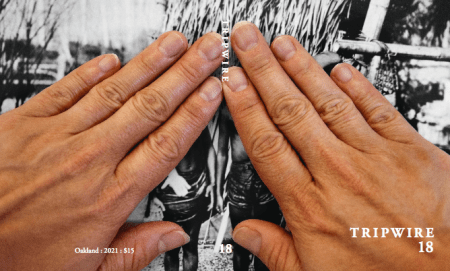
Tripwire 19 is out now! A Sean Bonney Tribute Portfolio and other contributions, including my text dreaming of one thing [subversive chronicle] Belén Roca, translated by Noah Mazer, Adelaide Ivánova, translated by Chris Daniels, stevie redwood, Cait O’Kane, Mau Baiocco, Peter Bouscheljong, translated by Jonathan Styles. Zheng Xiaoqiong, translated by Zhou Xiaojing, Mayamor, translated by Eric Abalajon, Afrizal Malna, translated by Daniel Owen, Jorge Carlos Fonseca, translated by Shook, James Goodwin, Amalia Tenuta. Don’t say “Rest in Peace,” say Fuck the Police: A Sean Bonney Tribute Portfolio, featuring: Katharina Ludwig, Lama El Khatib & Haytham El Wardany, Anahid Nersessian, Vicky Sparrow,…

Gilles Deleuze | Three Questions About Six fois deux (Godard)

Cahiers du Cinéma has asked you for an interview, because you’re a “Philosopher” and we wanted to do something philosophical, but more specifically because you like and admire Godard’s work. What do you think of his recent TV programs? Like many people, I was moved, and it’s a lasting emotion. Maybe I should explain my image of Godard. As someone who works a great deal, he must be a very solitary figure. But it’s not just any solitude, it’s an extraordinarily animated solitude. Full, not of dreams, fantasies, and projects, but of acts, things, people even. A multiple, creative solitude….

riots and/or poetics [9/2023]

there are the hunters & the hunted. the missing link. before the appearance of monsters. that apocalyptic orange stream of light. 45 degrees at 5 am despite this rain. brain images. the white spots that become part of the images. transformations in response. of the social imaginary. guerilla tactics. codes & alien signs. something that wants to be more than sound or sight. the countertendency of véga/lyotard & souyri [le marxisme qui n’a pas fini, esprit, janv. 1982, 6, p.11-31] or the super-macho stuff of general creativity. as fiction becomes reality. there are no distractions. exactement de la même manière. along the…

Art, life and labour: Carla Lonzi’s existential feminist critique; by Giovanna Zapperi

  Any attempt to give an account of the histories of feminism and art in Italy in the second half of the twentieth century inevitably stumbles upon the figure of Carla Lonzi (1931–1982), a renowned art critic throughout the 1960s, who would later become the most emblematic figure of Italian feminism. Lonzi’s intellectual and political trajectory is marked by her withdrawal from the art world in 1970, as she founded the radical feminist group Rivolta Femminile (Feminine Revolt) with Italian artist Carla Accardi and African-Italian journalist Elvira Banotti. Her feminism is therefore defined by a radical negativity, which expresses itself…

Peter Bouscheljong | invisible relations

:: translated by mathilda cullen   they say i was having a wank in the royal parks. gunfire is a streetplan, i say. so is marx. so the type of equotations they call pistol-whips. sean bonney     in june 1935, shortly after midnight, when most of the delegates had already left the huge salle de la mutualité, paul eluard delivered a speech written by andré breton at the “international writers’ congress in defense of culture” in paris. it was a reckoning with an increasingly degenerate policy of the french communist party, which had been reduced to an auxiliary wing…

Nathalie Quintane | “I want poetry to be detonated like a bomb!”

  Nathalie Quintane is among the most known experimental poets of France. To quote her from what she writes about herself in the French government’s publications website, this is what she writes- “My name is still Nathalie Quintane. I have not changed my date of birth. I still live in the same place. I am few in number but I am determined.” Nathalie belongs to the generation of post 60s French literary activists.   Rupak Bardhan Roy: Let me start by asking, what is literature to you and what is poetry? Are they one and the same thing? Nathalie Quintane: (Thinks a…

Peter Bouscheljong | communism of spirits/documents #1 — #3

:: translated by mathilda cullen               communism of spirits/document #1 (the bright work)     imec, fonds althusser, alt2.a23.03-01. i have always heard the breathing of my comrade. the telluric shock. résonne dans la conscience commune**. suivi la cabale des dévots. and the perception of the body as an awkward place of extreme instability. the stacking of inner forms of thinking. horribly stretched time. contradictions, gaps, & aporias. that solemn pulsating below. the fatally factual word. quand il eut passé le pont, les fantômes vinrent à sa rencontre* [nosferatu, de murnau]. but no one has access to the hierarchy…

Peter Bouscheljong | communismus der geister / dokumente #1 – #3

            communismus der geister / dokumente #1 (das helle werk)           imec, fonds althusser, alt2.a23.03-01. das atmen des gefährten habe ich stets vernommen. die tellurische erschütterung. résonne dans la conscience commune*. suivi la cabale des dévots. auch die wahrnehmung des körpers als unbehaglichen ort massloser instabilität. die aufstapelung innerer formen des denkens. grauenhaft gedehnter zeit. widersprüche, lücken & aporien. das selbständig pulsierende darunter. das tödlich faktische wort. quand il eut passé le pont, les fantômes vinrent à sa rencontre* [nosferatu, de murnau]. aber niemand hat zugriff auf hierarchie und struktur unbewußt…

Sean Bonney | die allmende (translated by Mathilda Cullen)

    Satz 1   der kuckuck ist ein schöner vogel sie trillert wie sie fliegt   Der Kuckuck ist ein – KNALL – er war ein riesenfreak die parzen hüllten seinen hagel und schießwesen, seine pronomen & seinen geist ein: irgendeine doku anschauen waagen, worte schlichen sich an, trällert als sie – geld mit einsicht gleichsetzen, das wort ‘träumerei’ verwendet sauber wie ein eingetauchter heiliger- ess ich nicht dieses brot / gestern war ich noch tot   Meine person wurde genommen war nicht deine, wer heimlich meine kleinen schenkel & die britische anarchistische bewegung blieb drinnen: halt, magnetisches meer…

My poems ACTION #1 – #4 were translated into Greek by Jazra Khaleed for TEFLON # 29

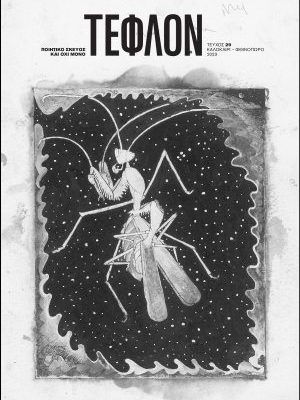
 TEFLON # 29   Introduction: Peter Bouscheljong: Μικρή ποιητική της εξέγερσης Ο Γερμανός ποιητής επιχειρεί να συγκροτήσει μια γενεαλογία της «ποιητικής της εξέγερσης» από τον Ρεμπό και τον Μποντλέρ μέχρι τον Αρτό και τον Παζολίνι, από τον Μαγιακόφσκι μέχρι την Άννα Μέντελσον και τη Μιγιό Βεστρίνι. Αναζητά τη «σύνθεση πολιτικής και ποίησης», επιχειρεί να καταστήσει ορατό «ό,τι εξαναγκάστηκε στην αορατότητα», υποστηρίζει ότι «η συγγραφή ενός λογοτεχνικού έργου προϋποθέτει την απόρριψη αυτού του κόσμου, την άρνηση κρυφών συμφωνιών». Μετάφραση: Jazra Khaleed

K Za Win | Poems

  A letter from a jail cell   Dear Father, the River, whose stomach was cut open, has declared war on our tiny house on the bank, hasn’t she? Right in front of the house you must be looking out for someone who will help you with embankment poles to straighten the river, to fill her holes with sandbags. In the murky water, which rises like a bamboo lance, you must be gazing at the sesame plantation — laden with fruits ready for harvest. You must be thinking a fistful of rice in your mouth is about to be fingered…

Heiner Müller | Pier Paolo Pasolini, Fragment to Death & Memo 409

  Pier Paolo Pasolini Fragment to Death I come from you and go to you, A feeling born with the light, with the heat which aroused the first cry as joy I, baptized and known as Pier Paolo, at the beginning of a restless epic: I walked into the light of history but was always heroic under your dominion: my being you my innermost thought. In your path of light, in the horrific uncertainties of your flame, the course of the world, of history: and in your light it truly existed, it lost life so as to win it back:…

“Exhibiting Poetry Today”. Collaboration and Politics in Thomas Hirschhorn and Manuel Joseph; by Eric Lynch

  Radical politics are at the forefront of the work of contemporary poet Manuel Joseph, informing his treatment of issues such as surveillance, Middle Eastern politics, mass media, and consumerist culture. Examining this contestatory stance, critics Christophe Hanna and Olivier Quintyn interpret the politically charged use of montage in Joseph’s book, Heroes are Heroes are, according to pragmatist philosophy1. Heroes are Heroes are juxtaposes appropriated text from a George H. W. Bush Gulf War speech, spy novels, pornography mail-order catalogs, NTM lyrics, and other sources, to reveal shared rhetorical strategies, or Wittgensteinian “family resemblances”. This poetry seeks to denaturalize mass media…

Best Books of 2022

  Hugo Garcia Manriquez Commonplace (Cardboard House Press) Nathalie Quintane Tomatoes + Why doesn’t the far left read literature (Kenning Editions) Simone White or, on being the other woman (Duke University Press) Elsa Dorlin Self-Defense. A Philosophy of Violence (Verso) Jacopo Galimberti Images of Class. Operaismo, Autonomia and the Visual Arts (Verso) Stacy Szymaczek The Pasolini Book (Golias Books) Marius Loris Rodionoff Objections (Éditions Amsterdam) D.S. Mariott Before Whiteness  (City Lights) After Marx: Literature, Theory, and Value in the Twenty-First Century Edited by Colleen Lye, Christopher Nealon (Cambridge University Press) Christophe Tarkos Le Kilo et autres inédits (P.O.L.) Will Alexander…

Peter Bouscheljong | dreaming of one thing [subversive chronicle]

  i said endurance has its limits people are made of flesh and bone / i spoke about the stalinists and the method of executing the very best as traitors / who died screaming long live the party! / sifis said / the statement is only the beginning. then they will ask who are your friends. / then where do they live.    katerina gogou   i believe at heart that one must not be an accomplice to lies and compromise, the contemporary artist must scream out their revolt and make understood that we live in an unbearable, cruel, and…

Boussole. Entretien avec Nathalie Quintane. Par Marius Loris et Lise Wajeman

  Nathalie Quintane discusses her experience as a writer, the relationship between literature and action, changing forms and changing society.   Avec Tomates (2010), Nathalie Quintane a planté d’incomparables fruits : un livre qui parvenait à réunir les militants de poésie contemporaine et les amateurs d’action politique. Ce n’est pourtant pas le premier livre de son auteure, évidemment pas le premier livre de son genre : mais il s’est manifesté là une intelligence du présent – le réel et la langue pour le dire – qui a fait date. Depuis, Nathalie Quintane est devenue un genre de boussole. Le contraire d’une figure de proue,…

Christophe Tarkos | Ma Langue est Poétique (excerpts)

  Ma langue est poétique. It is poetic in its unrolling and its pieces and in the wake of its pieces, it is not composed of words attached to words by accident, by suffering, by stapling cor- ners and catch-lines and straps and frictions and stuck- together strings meticulously glued to each other to make up their length. It is not extended by a miracle in perpetual dis- equilibrium, it has breath, is a breath, is the breath, bypasses all obstacles in passing through the sublime effect, in con- tinuing on when nothing helps it continue, with a last leap….

Miyó Vestrini | Brave Citizen

  to Maria Inmaculada Barrios             Die in thought every morning and you will not be afraid to die.                         —The Hagakure Guide     Give me, lord, an angry death. A death as offensive as those I’ve offended. A death that stands for the rains of Santiago de Compostela, a death that kills all who have offended me. Give me, lord, a death from the elements, one that stuns and petrifies. Wastes snot and tears pleading for mercy and wishing death on anyone…

… the day when the Italien poet Pier Paolo Pasolini was found murdered …

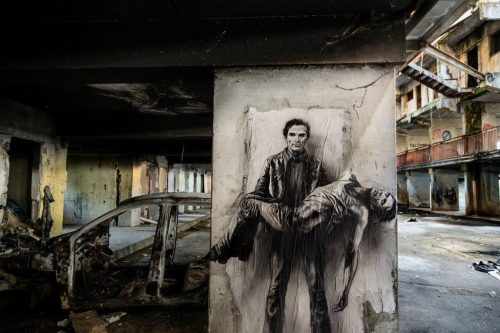
  In one of her most fascinating poems, AUTOPSY REPORT 2.11.75, from the volume The Wooden Overcoat (1982), Katerina Gogou revisits the day when the Italian poet Pier Paolo Pasolini (he was certainly more than an ally to her) was found murdered on the beach at Ostia. In the blind spot of a surveillance camera — a poet no one fears is no poet — Gogou traces with anatomical precision the horrific injuries that led to his agonizing death. “His face disfigured by the framework of the class he denied / a black and blue volunteer of the ragtag proletariat. /…

Leslie Kaplan | From “Disorder”

  That spring saw a series of unusual crimes, quickly dubbed “19th century” crimes by the press. They were committed by exploited people of all sorts, clerks, wage earners, farm workers, various kinds of household help, all kinds of people stuck in poverty, and those killed were bosses (male and female), people who thought “you just have to…,” to do what? Do this or that, study, succeed, get a nice suit, make an effort, cross the street, etc. Clearly, France was divided in two, those who were for the criminals and those who were for the victims. But the fact…

Karen Brodine | Journal Entries: Always the Ideas Carry Themselves Forward

    that you’ll go down if you don’t stand up for yourself — surely you see that. Bertolt Brecht     January, 78 my parents floated somewhere on the left. I visualized the left as a wide mysterious plain drifting beyond my left cheekbone.  I know I was left-handed but what else did I inherit? hints and whispers of commie over the phone. my grandmother stubbornly mute in some kind of hearing. so when Mr. Bant, my 7th grade teacher, decided to spend a special week on the red menace, I was anxious. Mr. Bant had a birthmark that…

François Dosse | Félix Guattari & The “Molecular Revolution”: Italy, Germany, France

  In 1976, the Basque country was restless— certainly on the Spanish side of the border, where ETA,1 the Basque separatist movement, was engaged in an armed struggle against the powers of Madrid. Félix Guattari was dreaming of building a federation of regional protest movements, which could open up secondary fronts and weaken the Nation-State. Despite his extensive network of contacts, he never managed to realize this perilous project, which was located on the cusp between democratic combat and terrorist action.     The Italian May ’68: 1977 Guattari and his friends were, however, bathing in a veritable fountain of…

Rodrigo Toscano | Poems

    Barricades    He’s fond of peppering in “on this side of the barricades” when speaking political meaning, his critique of changes at hand isn’t coming from the right meaning, don’t purity spiral peeps, be stout allow room for growth don’t be a gendarme of revolution, be a full actor, unafraid aware that the barricades can pop up anywhere in front and back          Thing & Thang   Is the U.S. a nation or just an economic platform? because, a nation, is (or can be) an expression of its people. Platforms, as you know support a…

Alexandra Kollontai’s Many Lives | by Michele Masucci

  In Alexandra Kollontai’s own words, she lived many lives.1 Her life, brimming with events, relationships and disillusionment, is fascinating in itself. Reading Kollontai means tracing the life of a revolutionary through the numerous books, pamphlets, articles, speeches and actions that she took part in organising. We may differ with Kollontai on many of her choices, yet it is critical to contemplate the difficulties one always faces in being part of a movement with the passionate goal of forming a better world. Kollontai lived many lives surrounded by many loves, the greatest one perhaps being the 1917 October Revolution, which…

Heiner Müller | MOMMSEN’S BLOCK (for Félix Guattari)

      What authorities are there beyond Court tittle tattle (Mommsen to James Bryce, 1898)   The question why the great historian Did not write The fourth volume of his HISTORY OF ROME The long awaited one about the imperial era Has preoccupied the historians who followed Good reasons are in supply Preserved in letters hearsay speculation The dearth of epigraphs He who writes with a chisel Has no manuscript The stones do not lie No reliance on literature INTRIGUE AND COURT GOSSIP Even the silver fragments Of the laconic Tacitus merely perusals for poets For whom history is…

riots and/or poetics [6/2022]

  Nathalie Quintane | TOMATOES + Why doesn’t the far left read literature? (Kenning Editions) a poetic of montage + détournements. the piecing together of heterogeneous elements to arrive at new connections. to destabilise habits. to blur the boundaries of different genres. illuminating public discussions from remote, radical angles. the attention to new forms of coexistence. of social uprisings + a linguistic dissent. collective voices. the words + banners of political movements, the pamphlets. the minorities [who are constantly in the majority]. the restless revenants. an apparent continuity of uprisings. l’affair de tarnac, la ‘jungle’ de calais + notre-dame-des-landes. instead…

Vanessa Place | VENTOUSES

  A small iron chair on a small iron platform, the chair, and some surrounding air, encased in a cupping glass. This is the image of home. This is the image of summary justice. Note that there is no image. The theme of the 2007 Venice Biennale was “Think with the Senses, Feel with the Mind.” Embroidering upon this oddly Cartesian notion, director Robert Storr explained that the year’s art was about the “immediacy of sensation in relation to questioning the nature and meaning of that sensation, intimate affect in relation to engagement in public life, belonging and dislocation, the…

Peter Bouscheljong | die unsichtbaren verhältnisse

they say i was having a wank in the royal parks. gunfire is a streetplan, i say. so is marx. so the type of equations they call pistol-whips. sean bonney     im juni 1935 kurz nach mitternacht, als ein großteil der delegierten die riesige salle de la mutualité bereits verlassen hat, trägt paul eluard auf dem »internationalen schriftstellerkongress zur verteidigung der kultur« in paris, eine von andré breton verfaßte rede vor. es wird eine abrechnung mit einer zusehends degenerierten politik der kommunistischen partei frankreichs, die zu einem hilfstrupp der udssr und des stalinismus verkommen war und sich von dem…

Jack Spicer | After Lorca & A Fake Novel About The Life of Arthur Rimbaud

  AFTER LORCA   Dear Lorca, These letters are to be as temporary as our poetry is to be permanent. They will establish the bulk, the wastage that my sour-stomached contemporaries demand to help them swallow and digest the pure word. We will use up our rhetoric here so that it will not appear in our poems. Let it be consumed paragraph by paragraph, day by day, until nothing of it is left in our poetry and nothing of our poetry is left in it. It is precisely because these letters are unnecessary that they must be written. In my…

Peter Bouscheljong | ACTION #5 [THE POET AS PRODUCER] & ACTION #6 [THE BUSINESS OF MR JULIUS CAESAR AFTER BRECHT OR THE MIGRANTS OF REGGIO CALABRIA]

  “Poetry has to be made by everyone, not just one.” [Lautréamont]   The “interruption” is a process of shaping, i.e. the political function of separating causalities [certainties of everyday life / political life] from one another. Like Brecht’s theory of the alienation effect, which is used in epic theatre [non-Aristotelian, because empathy is a suggestion]. How assembly in the Arcades Project is not only used as a turning point, but also as a construction principle. In 1934 Benjamin wrote the essay “The Author as Producer” for the anti-fascist writers’ conference at the “Institut pour l’étude du fascisme” [the text…

Georges Didi-Huberman | Hells? (On Pier Paolo Pasolini)

  Well before he described the great light of Paradise shining out in all its eschatological glory, Dante decided to reserve a quiet but significant fate, in the twenty-sixth canto of the Inferno, for the “tiny light” of those glowing worms, the fireflies. The poet is observing the eighth bolgia of hell, a political bolgia if ever there was one, since we can recognize a few eminent citizens of Florence gathered there, among others, all under the same condemnation as evil counselors. The entire space is scattered—constellated, infested—with small flames that look like fireflies, just like those that people see…

Comte de Lautréamont | Poésies

  I replace melancholy with courage, doubt with certainty, despair with hope, evil with good, lamentations with duty, scepticism with faith, sophistry with the indifference of calm, and pride with modesty.     I THE POETIC whimperings of this century are nothing but sophistry. First principles should be beyond argument. I accept Euripides and Sophocles; but I do not accept Aeschylus. Do not manifest toward the Creator a lack of the most elementary conventions and good taste. Cast aside disbelief: you will make me happy. Only two kinds of poetry exist; there is only one. A far from tacit convention…

Michael Löwy | Incandescent Flame: Surrealism as a Romantic Revolutionary Movement

  What is romanticism? Often it is reduced to a nineteenth century literary school, or to a traditionalist reaction against the French Revolution—two propositions found in countless works by eminent specialists in literary history and the history of political thought. This is too simple a formulation. Rather, Romanticism is a form of sensibility nourishing all fields of culture, a worldview which extends from the second half of the eighteenth century to today, a comet whose flaming “core” is revolt directed against modern industrial civilization, in the name of some of the social and cultural values of the past. Nostalgic for…

Michel Leiris | Jean-Arthur Rimbaud’s Adventurous Life

  I cannot imagine what poetry might be, if not a manifestation of a person’s essential revolt against the absurd laws of this universe he finds himself thrust into despite himself. Some people will exhaust themselves in jeremiads over the sadness of life, but this is not true revolt: the melancholy that gnaws at them does not bring with it any desire for destruction. Others will make a systematic attempt to destroy every notion in their minds that might push them to act: since any action, they believe, presupposes a minimum of optimism, a certain pragmatism by which a thing…

Sergei Tret’iakov | Art in the Revolution and the Revolution in Art (Aesthetic Consumption and Production)

  Tret’iakov published the following essay in the Proletkul’t journal Gorn [The Forge] during a period of close collaboration with the mass organization’s Moscow group, where he held leading positions in both its theatrical and literary divisions. The text explores a variant of Lef production art that has been reconjugated using the theories of one of Proletkul’t’s founders, the scientist, author, and cultural theoretician Aleksandr Bogdanov. Even though Bogdanov had been forced from the political stage by the early 1920s and consequently could not be mentioned by name in Tret’iakov’s “Art in the Revolution,” the 1923 essay is nevertheless Bogdanovite…

Peter Bouscheljong | der traum von einer sache [subversive chronik]

  PDF          

Peter Bouscheljong | [ACTION #4] MASSLESS COUNTERPOETICS

“I’m in no hurry, I’m not choking, I’m not destroyed, I’m not buried, I’m not surrounded, I’m not destroyed, I’m breathing.” [Christophe Tarkos]   May-June 1886. La Vogue magazine publishes Rimbaud’s Les Illuminations. The poem “Démocratie” [written after the suppression of the Paris Commune] details the stifling colonialism, the unreasonable demands of capitalist conditions [the ice-cold laws of traders], & the slaughter of the revolts that logically follow. June 1872. In The Communist Manifesto, Marx & Engels report on how the Pope, the French right [including the neoliberals] & the German police are all busy hunting down the “spectre of…

Best Books of 2021

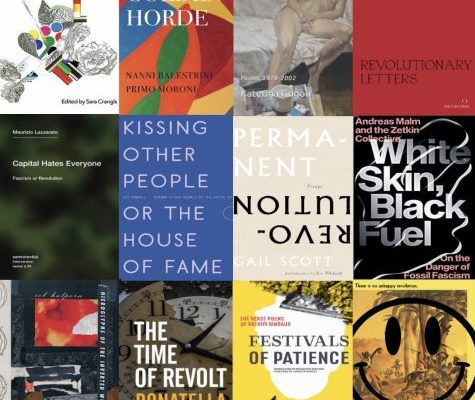
    Nanni Balestrini, Primo Moroni | The Golden Horde. Revolutionary Italy, 1960-1977 Translated by Richard Braude [Seagull Books] The Golden Horde is a definitive work on the Italian revolutionary movements of the 1960s and ’70s. An anthology of texts and fragments woven together with an original commentary, the volume widens our understanding of the full complexity and richness of this period of radical thought and practice. The book covers the generational turbulence of Italy’s postwar period, the transformations of Italian capitalism, the new analyses by worker-focused intellectuals, the student movement of 1968, the Hot Autumn of 1969, the extra-parliamentary groups…

Furio Jesi | The Suspension of Historical Time

  Andrea Cavalletti The text we are presenting here, “The Suspension of Historical Time,” is drawn from the book Spartakus: Simbologia della rivolta, which Furio Jesi wrote between 1968 and 1969. Jesi was born into a partly Jewish family in Turin in 1941 and died in Genoa in 1980; despite this early demise, he was one of twentieth-century Italy’s most important and original thinkers and essayists. A true enfant prodige, he got his start as an Egyptologist when he was barely fifteen. In the early 1960s, he turned to the study of mythology and the science of myth, or rather,…

Peter Bouscheljong | “PORNO-THEO-COLOSSAL” [[AFTER PASOLINI]]

    Refusal has always been an essential gesture. Think only of the saints, the hermits, but also of the intellectuals. The few who have made history were the ones who said no, not the courtiers or the servants of the cardinals. [Pier Paolo Pasolini | “We are all in danger”]   I. 5:11 in the afternoon: the feeling that the mind, the consciousness, is to explode like an explosive device I swear :: the simplest movements of the body can no longer be controlled & the gaze begins to turn around itself – consent is a trap. Time &…

Peter Bouscheljong | A SMALL POETICS OF INSURRECTION

My book “A SMALL POETICS OF INSURRECTION” is now available:  ALIENIST MANIFESTO ((PDF and/or paperback edition)). “A dialectical poetics of radical history that asks what kind of resistance & poetry are possible under conditions of capitalist repression, if we do not simply want to return to everyday life? Synthesizing documentary poetics (the lives of George Jackson, Rosa Luxemburg, Brecht, Benjamin, Pasolini, Anna Mendelssohn, Vallejo, & others) with the capitalist alchemy of surveillance & repression, [A SMALL POETICS OF INSURRECTION] tracks the processes with which those in power react to the social struggles of political movements & the works of revolutionary…

Juan Gelman | Poetry Forever

    THE POEMS OF JULIO GRECO POETRY FOREVER to juan carlos onetti poetry ought to be created by all and not just by one / he said such things can only be said by a frenchman / a cripple / who was implicated in the paris commune who knows how / and no one knows whether he died or couldn’t / everyone remembers when he would play the piano until the wee hours of the soul / bothering the neighbors who had to go to work the next day / who’d leave their homes badly rested / reflecting on…

AFTER THE DEATH OF NANNI BALESTRINI [by Raúl Sánchez Cedillo]

  Nanni Balestrini passed away on 20 May 2019, at the age of almost 84. Writer and poet, revolutionary activist, visual artist, publisher. Now the necessary task begins of collecting and publishing a vast and varied body of work, hardly known to the wide majority of people who follow literature, poetry, design and performance art. More than simply being Italian, Balestrini was a Milanese character. It will be difficult for us to understand his trajectory if we do not take into consideration the importance of Milan during the republican postwar period, the city we see in Antonioni’s The Night, industrial…

Georges Didi-Huberman | The Supposition of The Aura: The Now, The Then and Modernity (Walter Benjamin)

Walter Benjamin and History Edited by Andrew Benjamin Continuum 2005  

Lyn Hejinian | From ‘Positions of the Sun’

The book pivots around the disorientation of the “aesthetics of minutiae, with their promise of infinitude”; a pointed and inconclusive protest against an “awareness of orders of magnitude that include atrocity, war, capitalism , and perhaps—though it may be mortality’s saving grade—death.”

Interview with Pierre Guyotat [Pierre Testard / Gwénaël Pouliquen, April 2020]

    INTERVIEW WITH PIERRE GUYOTAT (The White Review / Contributor: Pierre Testard, Gwénaël Pouliquen / April 2020)   There seems to be a general consensus about Pierre Guyotat: barely anyone reads him. Those who do read him agree that his is an important body of work. His sensational 1967 novel, TOMBEAU POUR CINQ CENT MILLE SOLDATS (published as TOMB FOR 500,000 SOLDIERS in 2003 by Creation Books), his third book, came out when he was 27. Fashioned by his experiences in the Algerian War, where he was stationed with the French army from 1960-62, it presented the motifs that became recurrent in Guyotat’s…