Peter Bouscheljong | dreaming of one thing [subversive chronicle]

  i said endurance has its limits people are made of flesh and bone / i spoke about the stalinists and the method of executing the very best as traitors / who died screaming long live the party! / sifis said / the statement is only the beginning. then they will ask who are your friends. / then where do they live.    katerina gogou   i believe at heart that one must not be an accomplice to lies and compromise, the contemporary artist must scream out their revolt and make understood that we live in an unbearable, cruel, and…

AFTER THE DEATH OF NANNI BALESTRINI [by Raúl Sánchez Cedillo]

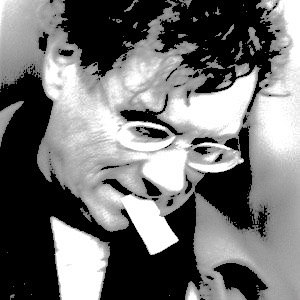
  Nanni Balestrini passed away on 20 May 2019, at the age of almost 84. Writer and poet, revolutionary activist, visual artist, publisher. Now the necessary task begins of collecting and publishing a vast and varied body of work, hardly known to the wide majority of people who follow literature, poetry, design and performance art. More than simply being Italian, Balestrini was a Milanese character. It will be difficult for us to understand his trajectory if we do not take into consideration the importance of Milan during the republican postwar period, the city we see in Antonioni’s The Night, industrial…

riots and/or poetics [5/2021]

Thus ’77 saw a flaring up, a quotidian generalization of a political and cultural conflict with ramifications for every part of society, exemplifying a conflict that had taken place throughout the 1970s, a fierce conflict both between classes and within the class, perhaps the fiercest seen since the Unification of Italy. Forty thousand criminal charges, 15,000 arrests, 4,000 people sentenced to a thousand years of prison—and then there were the deaths and the hundreds of wounded on both sides. There is no doubt that these figures cannot be considered merely the result of some risky, crazy plan dreamt up by…

Nanni Balestrini | “I write to you opposite the balcony from whence I contemplate the eternal light whose radiant fire slowly fades on the distant horizon”

At one point in ‘Blackout’, Balestrini writes, “This poem should not be published because it is a political manifesto.” The historical events with which ‘Blackout’ is concerned and toward which it is critical began with the wave of conflicts in 1968 at the universities and factories and eventually spread throughout the West. The protests culminated in the “troubled autumn” of 1969, eventually involving the entire Italian working class in strikes, demonstrations, and acts of sabotage.

Nanni Balestrini | Wer das hier liest, braucht sich vor nichts mehr zu fürchten (Interview)

  Der 1935 in Mailand geborene Schriftsteller Nanni Balestrini gehört zu den wenigen, die, obwohl sie im normalen Literaturbetrieb anerkannt sind, weiterhin über die revolutionäre Bewegung der 60er und 70er schreiben. Selbst Aktivist der sozialen und Klassenkämpfe der Jahre 1968-80 in Italien, hat Balestrini alle seine Romane über die Geschichte der radikalen Linken geschrieben. Seine Bücher handeln von den Arbeiterkämpfen bei FIAT, von den Ursprüngen des bewaffneten Kampfs oder von der Jugendbewegung (Autonomia) Mitte der 70er. Sein Standpunkt bleibt dabei klar, an der subjektiven Sicht der Rebellierenden rüttelt Balestrini nicht. Ihm geht es, auch wenn er nach eigenem Bekunden, „keine…

Félix Guattari and Radio Alice

La Radio Siamo Noi Félix Guattari | Millions and Millions of Potential Alices Félix Guattari | Popular free Radio etc. ⇒ PDF   Provocative Alloys: A Post-Media Anthology ⇒ PDF     Félix and Alice in Wonderland: The Encounter between Félix Guattari and Franco Berardi and the Post-Media Era Michael Goddard Introduction: The Enigma of the Post-Media Era   Towards the end of his life, Felix Guattari made several enigmatic suggestions about the emergence of a Post-Media era that would have the effect of displacing or at least decentring the hegemony of the mass media as we still know them today. Some of these…

Nanni Balestrini | “I close my eyes and start to sing”

NANNI BALESTRINI (1935-2019)     I close my eyes and start to sing threads are entangled and transformed into spots whose dance moves ever more slowly I sang my repertoire then I started monologues with my eyes closed I walked back and forth in the cell four steps forward four steps back I invented dialogues for two characters that spoke different languages like at the cinema when the film ends there are those who make love who smoke there are those who merely exist   Nanni Balestrini, the radical Italian experimental visual artist, poet, and novelist known for recombinatory, revolutionary…

Pragmatic/Machinic: Discussion with Félix Guattari [by Charles J. Stivale]

  The following discussion with Félix Guattari took place in his apartment in Paris. With the help of a number of friends, I had prepared a set of questions, and had contacted him to see if he might be available to answer some of them.\1 He responded immediately, and left messages with the friend in Paris in whose apartment I would be staying. Prior to the trip, I also had contacted Gilles Deleuze to arrange an extended interview, and although his schedule and health prevented him from agreeing to a long session, I did visit him at his apartment the…

Italy 1977-8: Living with an earthquake – Red Notes

  Italy 1977-8: Living with an earthquake – Red Notes A pamphlet from a time when a very high level of class struggle dominated Italian society. Despite their differences – the state, church, fascists, Communist Party and unions were all united in opposition to the the radical social movement.    A. Preface We have called our pamphlet “Living With An Earthquake”. This earthquake is not just the crisis at Government level – it is a quite new political upheaval affecting the whole of Italian society. We have produced this pamphlet because it is vitally important that the out­side world should…

Tiqqun | This Is Not a Program

“’77 wasn’t like ’68. ’68 was anti-establishment, ’77 was radically alternative. This is why the ‘official’ version portrays ’68 as good and ’77 as bad; in fact, ’68 was co-opted whereas ’77 was annihilated. This is why, unlike ’68, ’77 could never make for an easy object of celebration.”
— Nanni Balestrini, Primo Moroni, L’orda d’oro

Nanni Balestrini; »If you read this, you must no longer fear anything«

  • We Want Everything • Nanni Balestrini and the Poetry of the Italian Autonomia • Blackout • Carbonia (We Were All Communists) • On Nanni Balestrini, the Most Radically Poet of the Italian Scene     WE WANT EVERYTHING THE STRUGGLE These guys I’d talked to about the struggle couldn’t accept it, they didn’t know what the fuck to do. They didn’t understand what I was proposing. They felt somehow that what I was proposing was right, but they didn’t know how to act on it. They didn’t understand that the important thing was to stir things up all…