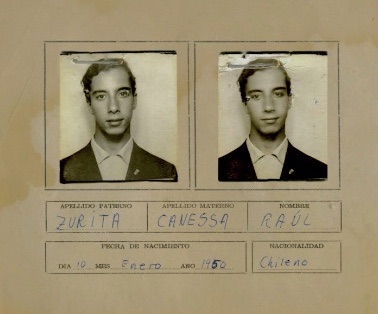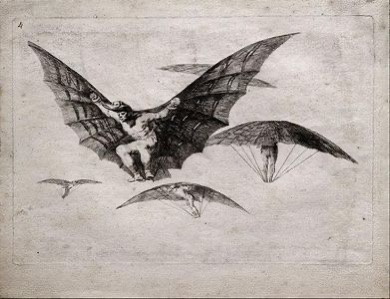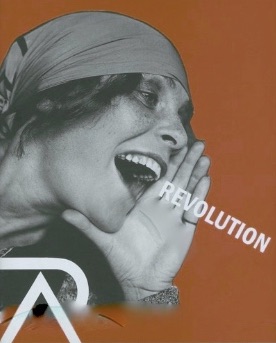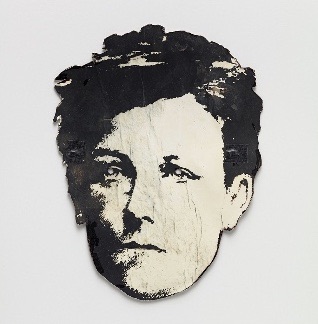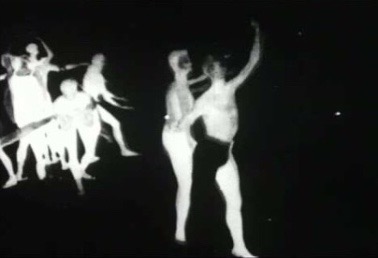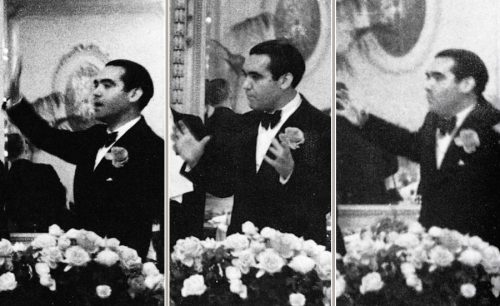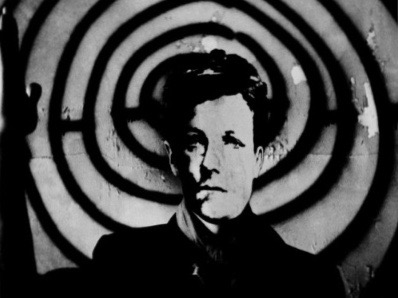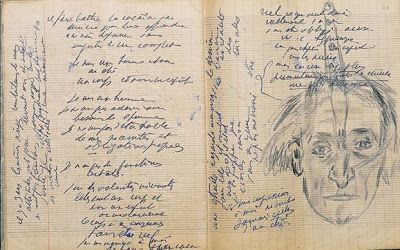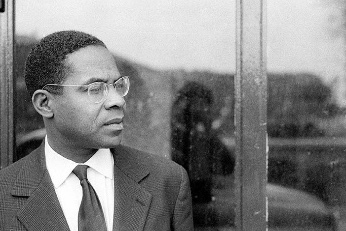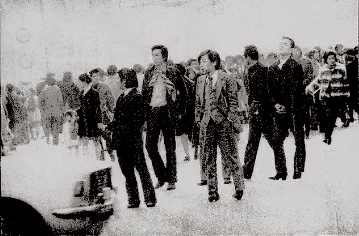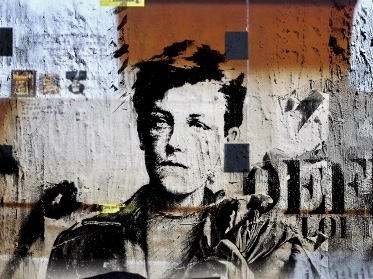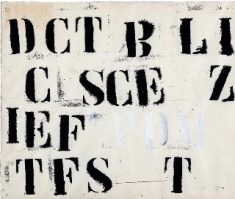
Dieser Film ist auf brennendes Papier geschrieben, wird Pasolini über LA RABBIA sagen / die Verknüpfung politischer Vernunft mittels poetischen Gefühls [das ein entschieden marxistisches ist]. Während sein Zorn sich gegen die täglich gelebte Normalität des Notstands [stato d’emergenza] richtet, die vermessene Ausgestaltung & Verteilung des Mangels [eines dystopischen Beschleunigungsapparates], inmitten neu aufgeputzter Mumifizierungen [Details in rosa Schaumbildung], entdeckt er die Synthese von Politik & Dichtung, also Marx & Rimbaud in der Montage einiger Bilder aus dem Afrika des »Sehers« [zeitweise ein gedanklicher Rückzugsort], der politischen Kartographie Patrice Lumumbas. Die Aufteilung des Menschen in Herr und Knecht [in der…
Category: Poetry & Poetics
Peter Bouscheljong | [ACTION #1] HEINER MÜLLERS INSZENIERUNG DES ‘DER UNTERGANG DES EGOISTEN JOHANN FATZER’ VON BRECHT
Ich mache keinen Krieg mehr, sondern ich gehe jetzt heim gradewegs, ich scheiße auf die Ordnung der Welt. Schwarmstrategien [Smart Mobs] unterhalb des Radars. Die Geschichte von vier Deserteuren im Jahr 1918 [der abgerissene Sehnerv der in seinem Versteck von Revolution träumt]. Etwas das sich innerhalb der Mauern ansammelt, sprechende Wände im »Toten Trakt« / ein diffuses Glühen. Projektion: Liebknecht Luxemburg Meinhof. Jetzt kehrt sich das Leben gegen die alten Gewohnheiten. Niemand sieht jetzt / niemand kehrt zurück / als wäre der Sinn nie entfernt worden / das Gefühl die Schädeldecke müßte eigentlich zerreissen. Die bösartige Leugnung eines Virus…
Bertolt Brecht | A lesson in sabotage
A lesson in sabotage Modifying a machine After the machine so that it won’t work without you So far improve it that you alone are good enough for it Give it a secret fault that you alone can repair Yes, alter it so that any other man will destroy it If the works it without you That’s what we call: modifying a machine. Modify your machine, saboteur! A lesson in sabotage Sabotage, mother of the factory Just as a mother knows what she has given birth to Wakes in the night at the baby’s slightest…
Peter Bouscheljong | artaud-theatre-du-vieux-colombier*.com
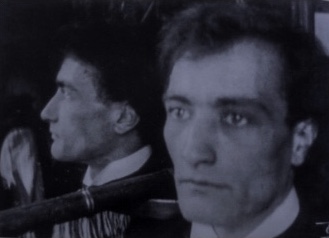
Die wahre Geschichte von Artaud-Mômo, tête-à-tête. Als würde man ein Bild unterhalb des Augenlids verschliessen. Gewisse Dispositionen zu entziffern, die ausschliesslich Teil eines poetischen Feldes sind [weil Poesie immer Opposition ist]. Abrechnung mit denen, die ihn 9 Jahre in einer geschlossenen Anstalt einsperren //3 Jahre davon in Einzelhaft// während der Zeit seiner Internierung in Sotteville-lès-Rouen [Oktober 1937 – März 1938] systematische Versuche der Intoxikation [vergessen die 40.000 Toten //ein Index verschämter Skelette// der psychiatrischen Anstalten Frankreichs während der deutschen Besatzung]. Sozialer Vampirismus, willkürlich konstruierte Diagnosen, Elektro- & Insulinschocks, weil er sich einer Logik entzieht, die von einzelnen Elementen auf…
Lisa Robertson
go Venus go vernal go turning go darling by folding sky by buoyant kiss by plenty (I lie in bed and read Marx) by secret breezes twisting, contriving by boulevards by cattle by springle a springald a springet rise agile from water, go down modern to the natal turn by rapacious meetings by luminous flowers – take with you the eagerness of my submission to the proliferate material discipline also called speech as the political feeling lusts for public light by engorged rivers by populated foliage by veering campus the cry of desire a morning blackbird in the city…
José Revueltas | So that Mayakovsky’s Suicide not be Repeated
While in Havana for a period of six months in 1961, working at a worthy task at the Cinematography Institute alongside the best youth of Cuba’s film industry, I once suggested to a small group of young intellectuals that we form a club or literary circle to debate the problems a writer must face under socialism. The circle, club, or whatever would develop from that idea, would have the following theme – theme and program at the same time: “so that Mayakovsky’s suicide not be repeated.” The idea did not prosper, although not for any weighty reason. That is,…
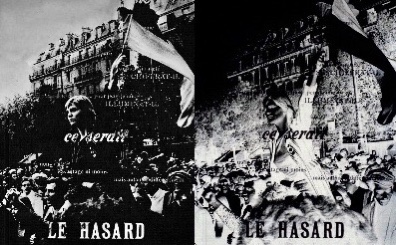
Peter Bouscheljong | ‘JEDE REVOLUTION IST EIN WÜRFELWURF’ / EVERY REVOLUTION IS A THROW OF DICE
ENGLISH TRANSLATION BY DAVID VICHNAR ALIENIST 7 1 Die Geschichte eines Typen der Kassiber für Pierre Goldman, Ulrike Meinhof und Toni Negri schmuggelt 2 Kein Schibboleth, das ihm nicht über die Lippen käme, ein linguistisches Chamäleon, mal Jude, dann wieder Anarchist 3 Von den ersten Gesetzen der Könige und Propheten (sowie der Gefängnisinsassen) bis in die Gegenwart sind Mauern und Wände das Fundament politischer Botschaften 4 Er glaubt an die Dichtung, aber die Dichtung ist unzulässig Im übrigen gibt es sie nicht 5 Der Text ist ohne Geheimnis Chaotisch und delirant 6 Eine…
Velimir Khlebnikov | The Law of Generations
Autobiographical Note I was born on October 28, 1885, in the camp of Mongolian Buddhist nomads—Khanate Headquarters in the steppe—the dried bottom of a vanished part of the Caspian (the sea of 40 names). During Peter the Great’s travels on the Volga, an ancestor of mine presented him with a goblet of coins gotten by brigandage. I have Armenian blood i my veins (the Alabors), also Cossack blood (the Verbitskys), whose special nature is evident in the fact that Przhewalski, Mikluktha-Maklai and other explorers were descendants of the children of the Sech. I belong to the place…
Mehdi Belhaj Kacem, Philippe Sollers | What is the Meaning of the Avant-garde’s Death?
FIRST PUBLISHED: DIAPHANES How could Dante be avant-garde? Mehdi Belhaj Kacem: Mr. Sollers, for 23 years you were the editor of Tel Quel, doubtless the very last important literary review that can be considered “avant-garde.” It published some of the biggest “avant-garde” writers of its time, like Pierre Guyotat, Maurice Roche, Jean-Jacques Schuhl and yourself, as well as still-unknown academics like Jacques Derrida, Roland Barthes and Gérard Genette. You also published Pierre Boulez and Jean-Luc Godard, who, like the writers and thinkers I just mentioned, were the leading avant-garde figures in their respective fields. In 1983 you left Les Éditions du Seuil,…
Nanni Balestrini | Wer das hier liest, braucht sich vor nichts mehr zu fürchten (Interview)
Der 1935 in Mailand geborene Schriftsteller Nanni Balestrini gehört zu den wenigen, die, obwohl sie im normalen Literaturbetrieb anerkannt sind, weiterhin über die revolutionäre Bewegung der 60er und 70er schreiben. Selbst Aktivist der sozialen und Klassenkämpfe der Jahre 1968-80 in Italien, hat Balestrini alle seine Romane über die Geschichte der radikalen Linken geschrieben. Seine Bücher handeln von den Arbeiterkämpfen bei FIAT, von den Ursprüngen des bewaffneten Kampfs oder von der Jugendbewegung (Autonomia) Mitte der 70er. Sein Standpunkt bleibt dabei klar, an der subjektiven Sicht der Rebellierenden rüttelt Balestrini nicht. Ihm geht es, auch wenn er nach eigenem Bekunden, „keine…
Walter Benjamin | The Author as Producer
II s’agit de gagner les intellectuels “la classe ouvriere, en leur faisant prendre conscience de l’identité de leurs de-marches spirituelles et de leurs conditions de producteur. – Ramon Fernandez You recall how Plato treats the poets in his projected State. In the interest of the community, he does not allow them to live there. He had a high idea of the power of poetry. But he considered it destructive, superfluous – in a perfect community, needless to say. Since then, the question of the poet’s right to exist has not often been stated with the same insistence;…
Pier Paolo Pasolini | A Desperate Vitality
I (Draft, in a cursus in present-day jargon, of what has just transpired: Fiumicino, the old castle, and a first real idea of death.) As in a film by Godard: alone in a car speeding down the motorways of Latin neo-capitalism — returning from the airport — [where Moravia stayed behind, a pure soul with his bags] alone, “racing his Alfa Romeo“ in sunlight so heavenly it cannot be put into rhymes not elegiac — the finest sun we’ve had all year — as in a film by Godard: under a sun bleeding motionless unique, the canal of the…
Danielle Collobert | It Then
I met Danielle Collobert in a cafe on the boulevard Saint-Germain in March or April 1958, at which time she was not yet eighteen. We immediately spoke of the essentials: writing, death. Theses two things—or is it one single thing—seemed to occupy her exclusively and with such rigor that one felt from the outset she would proceed in this single and unique direction, that no one could divert her or deceive her as to its end. At most, out of love for her, one could hope, idiotically of course, that sooner or later she would lose track, that her…
Jerome Rothenberg | Revolutionary Propositions & A Personal Manifesto
1) I will change your mind;
2) any means (=methods) to that end;
3) to oppose the “devourers” = bureaucrats, system-makers, priests, etc (W. Blake);
4) “& if thou wdst understand that wch is me, know this: all that I have sd I have uttered playfully—& I was by no means ashamed of it.” (J. C. to disciples, The Acts of St. John)
Peter Bouscheljong | Notes on Events ((Lamentation))
Published by: Burning House Press (Guest Editor: Johannes Göransson) “The language of tragedy for the Greeks is lethally factive, because the body it seizes hold of does really kill” — Friedrich Hölderlin Without a doubt this is the most repulsive of repulsive moments :: it’s no longer enough to say :: the goal is the abolition of capitalist realism or to hammer verses on the door of a cell the way you drive a nail into a wall / when disinhibition is rampant among the elite / they engineer new humiliations daily/ & the crumbs left over…
Jazra Khaleed | Poems (“Smashing Fascist Heads”)
REFRAIN My name is J-A-Z-R-A Here I’m illegal, in spite of the Left I was born in the dusk of the West And this evening is just splendid For smashing fascist heads TRANSLATED BY SARAH MCCANN SOMEWHERE IN ATHENS Somewhere in Athens December the Sixth The kid will kill the cop before sunup Somewhere in Athens December the Seventh On the streets the banks are burnt one by one Somewhere in Athens December the Eighth Let’s cut a rug in Parliament’s rubble Somewhere in Athens December the Ninth The poets in the streets eulogize fires…
riots and/or poetics [10/2019]
TRILCE XXVII That flood frightens me, / good memory, strong sir, implacable / cruel sweetness. It frightens me. / This house does me complete good, complete / place for this not knowing where to be. // Let’s not go in. It frightens me, this favour / of returning by minutes, by blown up bridges. / I’m not going ahead, sweet sir, / brave memory, sad / singing skeleton. // What content, of this haunted house, / gives me deaths by mercury, and blocks / with lead my conduits / to sheer reality. // The flood that doesn’t know how…
Antonin Artaud | Van Gogh the man suicided by society
Apropos of Van Gogh, magic and spells: all the people who, for two months now, went to see the exhibition of his works at the Musée de l’Orangerie, are they really sure they remember everything they did and all that happened to them every evening of the months of February, March, April and May 1946? Was there not a certain evening when the atmosphere of the air and the streets became liquid, gelatinous, unstable, and when the light from the stars and the heavenly vault disappeared? And Van Gogh who painted the café in Arles was not there. But I…
Miyó Vestrini | It’s a Good Machine
THE TRIP I’ll tell you how I know what I am: they say that I was conceived without sin my cries were answered with other cries people went on vacation and left me gave away my New Year’s clothes disowned the shame when I was absent I had no mourners for my trespasses threw breadcrumbs at watery graves placated my own desires held the ground between myself and the penumbra bought a dog and let it out paid César Vallejo to love me passed without glory or pain beneath the Mirabeau Bridge I don’t have a single friend…
Etel Adnan | MAYAKOVSKY
1 Mayakovsky, where are you? I can go to the train station and pick you up. we can speak of the weather on the way back, and if you’re coming by bus I can wait for you at the terminal and in case that you found enough money to have taken the plane I will get up early and wait for you. Don’t tell me dear Vladimir that you lost my address, and that you won’t come, not tomorrow, not ever, I still wait for you because we’re feeling miserable here, and elsewhere, in Europe or in California. We…
Karen Brodine | Woman Sitting at the Machine, Thinking
Karen Brodine: Feminist Poet and Revolutionary KAREN BRODINE was barely 40 years old when she died of cancer on October 18, 1987. Her death was a shock, a misery, an abrupt and unwarranted end to an exceptionally dynamic and productive life. The horrible thing is that Karen’s death was unnecessary. Cancer killed her because the medical profession was too profit-motivated, too sexist, to catch it in time, when they could and should have. And she was mad as hell at the medical automatons who prescribed the massive doses of poison known as chemotherapy when an ounce of prevention could have saved…
Jerome Rothenberg | Autobiography 1977 The First One Hundred
1 Archipelago of the wandering dream 2 A castle with two bodies 3 The figure of Rosa Luxemburg among the animals in cages 4 Midnight forest 5 Trains circling below the icy waters 6 A meeting in the bourse 7 The men come into the small locker room & order drinks 8 Picasso wears a hat with roses 9 He has shoes aglow with little lights 10 Electricity runs along the floor & in between the tables 11 Picasso & Rosa Luxemburg converse 12 Her face is the face of our…
César Vallejo | From “Art and Revolution”
THE REVOLUTIONARY FUNCTION OF THOUGHT Confusion is a phenomenon with a permanent, organic character in bourgeois society. Confusion grows ever thicker when it is addressed as already confusing problems by the very historical terms of its utterance. The latter occurs with the brand new and, at once, very old problem of the intellectual’s obligations with regard to revolution. As posed by historical materialists, this problem is already a tangle. When formulated or simply outlined by bourgeois intellectuals, it acquires the aspect of insoluble chaos. *** “The philosophers,” Marx says, “have only interpreted the world in various ways. The…
Sergio Raimondi | Poems
When the world changes, literature must as well. This is the credo motivating the thinking and writing of Argentine poet Sergio Raimondi, born in 1968 in Bahia Blanca. A somewhat gruff genius loci inhabits this place: the nearby port of Ingeniero White is one of Argentina’s main seaports; the nation’s most important petrochemical complexes is also located here. But Sergio Raimondi draws his very inspiration from this genius loci: even in his early work Poesía civil (published in German as Zivilpoesie in 2005), Raimondi—who teaches contemporary literature at the Universidad del Sur in Bahia Blanca—examines in depth Argentina’s changing…
Arthur Rimbaud | Illuminations (1872-1874)
AFTER THE FLOOD After the idea of the Flood had receded, A rabbit rested within swaying clover and bellflowers, saying his prayers to a rainbow spied through a spider’s web. Oh what precious stones sunk out of sight, what flowers suddenly stared. On the dirty main drag it was back to business; ships went to sea, piled on the water like a postcard. Blood flowed—at Bluebeard’s, in slaughterhouses, in circuses— wherever God’s mark marred windows. Milk and blood flowed. Beavers dammed. Steam rose from coffee cups in small cafés. The mansion’s windows were still streaming, mourning children within contemplating amazing…
Raúl Zurita | The Sea
Strange baits rain from the sky. Surprising bait falls upon the sea. Down below the ocean, up above unusual clouds on a clear day. Surprising baits rain on the sea. There was a love raining, there was a clear day that’s raining now on the sea. They are shadows, bait for fishes. A clear day is raining, a love that was never said. Love, ah yes, love, amazing baits are raining from the sky on the shadow of fishes in the sea. Clear days fall. Some strange baits with clear days stuck to them, with loves that…
Roger Gilbert-Lecomte | Necessity of Revolt: The Power of Renunciation
That’s agreed then. Tabula rasa: everything is true — there is nothing else. The great vertigo of Revolt has sent the phantasmagoria of appearances reeling and tumbling. Illusion shredded, the material world deforms, reforms, appears and disappears at the mercy of the rebel. A black gulf now swirls in place of what was the self, consciousness, the autonomy of the individual. His rolled-back eyes look between strained temples to where a vast, empty steppe stretches out, barred at the horizon by the floes of the old, bleached senses. He who has renounced everything outside himself just as he has…
Nanni Balestrini | “I close my eyes and start to sing”
NANNI BALESTRINI (1935-2019) I close my eyes and start to sing threads are entangled and transformed into spots whose dance moves ever more slowly I sang my repertoire then I started monologues with my eyes closed I walked back and forth in the cell four steps forward four steps back I invented dialogues for two characters that spoke different languages like at the cinema when the film ends there are those who make love who smoke there are those who merely exist Nanni Balestrini, the radical Italian experimental visual artist, poet, and novelist known for recombinatory, revolutionary…
Sean Bonney | Letters Against the Firmament
I haven’t written for a while, I know. There’s not been much to write about, or maybe, if there has been I haven’t seen it. That’s leaving aside, of course, the royal birth, the jubilee pageants and the olympics, that inbred panegyric. Christ, I’ve really felt the wings of imbecility passing over me lately, over all of us. Its as if the ruling class, sheer power, whatever you want to call it, whatever it’s local franchise likes to call itself, had, via some kind of sadistic alchemy, taken the moment (around 2 in the afternoon) on 27th March 2011…
Katerina Gogou | Sui generis
Look how the streets disappear amid people… how the kiosks get cold from the wet newspapers the sky how it is punctured by the wires and the end of the sea by the weight of the ships how sad the forgotten umbrellas are at the last bus and the mistake of the one that got off one stop too early the clothes left in the laundry and your shame two years after you made money and found out how to ask for it how bit by bit slowly, methodically it twists us to determine our stance on life by…
Velimir Khlebnikov | Collected Works 1/2/3
Collected Works:
1 Letters and Theoretical Writings.
2 Prose, Plays, and Supersagas.
3 Selected Poems.
Velimir Khlebnikov and ‘Displacement’ as Poetics, by Angelina Saule
Vladimir Mayakovsky | Order to the Army of the Arts
Order to the Army of the Arts [1] (1918) Threadbare men of the old brigade bore on about this and that. Comrades! To the barricades! Barricades of minds and hearts. Only those who have burnt their boats are true communists. You can’t just stroll on, you futurists, the Future requires a leap! It’s not enough just to build the engine — you need a head of steam: wheels turn, we’re off. If there’s no music to lead us on, why bother with AC or DC? Pile sound on sound and for the lyrics we’ve some great phonemes in Russian:…
Bertolt Brecht | The Reader for City Dwellers
1 Cover your tracks Split from your mate at the train station Go into town in the morning with your coat buttoned up Find a place And when your mate knocks, Don’t, oh, don’t open the door Instead Cover your tracks! If you bump into your parents in the city of Hamburg Or anywhere else (for that matter) Pass them like strangers, turn the corner, don’t acknowledge them Pull the hat, which they gave you, over your face Don’t, oh, don’t show your face Instead Cover your tracks! Eat the meat that’s there! Don’t save anything! Enter any…
Antonin Artaud
This is the first solo exhibition dedicated to the work of Antonin Artaud to be staged in the UK, and more significantly to focus on the rarely seen notebooks which Artaud began working on from the time of his arrival at the Rodez mental asylum in 1945, until his death at the Ivry clinic in 1948. The eventual 20,000 pages of image-text amalgam constitute one of his most significant bodies of work. An unclassifiable volume of writing and drawing. Portraits, names, calculations, glossolalia, sigils, lists of drugs and foods stuffs, formulae, totems, lexicons, anatomies, objects, (boxes, chains and nails), machines and implements of obscure purpose. There…
Arthur Rimbaud | The Letters (1870-1872)
TO GEORGES IZAMBARD Charleville, August 25, 1870 Monsieur, How lucky you are to be out of Charleville! In all the world, no more moronic, provincial little town exists than my own. I have no illusions about this any more. Because it is next to Mézières—which no one has heard of—because two or three hundred infantrymen wander its streets, my sanctimonious fellow residents gesticulate like Prudhommesque swordsmen, not at all like those under siege in Metz and Strasbourg! How dreadful, retired grocers donning their uniforms! How marvelous, as though that’s all it takes, notaries, glaziers, tax inspectors, woodworkers, and all…
Antonin Artaud | Alienation and Black Magic & Peter Valente | from “The Artaud Variations”
ALIENATION AND BLACK MAGIC Insane asylums are conscious and premeditated receptacles of black magic, and it is not only that doctors encourage magic with their inopportune and hybrid therapies, it is how they use it. If there had been no doctors there would never have been patients, no skeletons of the diseased dead to butcher and flay, for it is through doctors and not through patients that society began. Those who live, live off the dead. And it is likewise necessary that death live; and there is nothing like an insane asylum for gently incubating death, and for…
César Vallejo | Cuneiforms
No biographer or scholar can avoid the imprisonment that César Vallejo suffered between November 6, 1920, and February12, 1921, in Trujillo, an episode that stakes out an indubitable before and after in the life and work of the Santiaguino.
The first section of ‘Scales’, ‘Cuneiforms,’ and several poems of ‘Trilce’ were composed in his cell of Trujillo Central Jail. In effect, Vallejo wrote from and about the prison.
Antonin Artaud | Sylvère Lotringer; All Paranoiacs (Interview with Paule Thévenin)
Antonin Artaud | Post-Scriptum Who am I? Where do I come from? I am Antonin Artaud and if I say it as I know how to say it immediately you will see my present body fly into pieces and under ten thousand notorious aspects a new body will be assembled in which you will never again be able to forget me. Translated by Clayton Eshleman False Witnesses Sylvère Lotringer: You never told me how you met Artaud. Paule Thévenin: No, and I won’t say anything. SL: Ah! It’s a secret. PT: No. People are false witnesses. SL: And you?…
Jean-Marie Gleize | A Preparatory Act | Insurrection [8th December 2018: Julien Coupat preemptively arrested]
Saturday, 8 December 2018: Julien Coupat preemptively arrested a preparatory act … successive laws has constructed a system of emergency powers which renews the lois scélérates the charge of “criminal conspiracy to commit a terrorist act” it takes only two people to constitute a “terrorist group” and it takes only a preparatory act for the infraction to be so defined. This preparatory act is not specified relation—even tenuous or remote, even love or friendship—with any of the opposed to common law which criminalizes the acts, the antiterrorist approach implicated in a terrorist activity without having to establish a…
PROVOKE: Between PROTEST and PERFORMANCE
The short-lived Japanese magazine Provoke is recognized as a major achievement in world photography of the postwar era, uniting the country’s most contentious examples of protest photography, vanguard fine art, and critical theory of the late 1960s and early 70s in only three issues overall. Provoke is accordingly treated here as a model synthesis of the complexities and overlapping uses of photography in postwar Japan. The writing and images by Provoke’s members – critic Taki Koji, poet Okada Takahiko, photographers Nakahira Takuma, Takanashi Yutaka, Moriyama Daido – were suffused with the tactics developed in some Japanese protest books which made use of innovative graphic design and provocatively “poor” materials. Recording…
Arthur Rimbaud | A Season in Hell
* * * Long ago, if my memory serves, life was a feast where every heart was open, where every wine flowed. One night, I sat Beauty on my knee. —And I found her bitter. —And I hurt her. I took arms against justice. I fled, entrusting my treasure to you, o witches, o misery, o hate. I snuffed any hint of human hope from my consciousness. I made the muffled leap of a wild beast onto any hint of joy, to strangle it. Dying, I called my executioners over so I could bite the butts of their rifles….
Antonin Artaud | Manifesto In A Clear Language
If I believe neither in Evil nor in Good, if I feel such a strong inclination to destroy, if there is nothing in the order of principles to which I can reasonably accede, the underlying reason is in my flesh. I destroy because for me everything that proceeds from reason is untrustworthy.I believe only in the evidence of what stirs my marrow, not in the evidence of what addresses itself to my reason. I have found levels in the realm of the nerve. I now feel capable of evaluating the evidence. There is for me an evidence in the realm…
Nathaniel Mackey | Cante Moro
I would like to touch on the topic of “The New American Poetry“ where it opens onto matters we wouldn’t necessarily expect it to entail—not necessarily “new,” not necessarily “American,” not even necessarily “poetry.” What I’d like to touch on is the New American Poetry’s Spanish connection: Garcia Lorca’s meditation on the “dark sounds” of cante jondo, deep song, the quality and condition known as duende. I’ll be talking about that in relation to an array of “dark sounds” which bear upon a cross-cultural poetics intimated by the inclusion of Lorca’s “Theory and Function of the Duende” in The Poetics…
Arthur Rimbaud | Poems 1871/72
STOLEN HEART My sad heart drools on deck, A heart splattered with chaw: A target for bowls of soup, My sad heart drools on deck: Soldiers jeer and guffaw. My sad heart drools on deck, A heart splattered with chaw! Ithyphallic and soldierly, Their jeers have soiled me! Painted on the tiller Ithyphallic and soldierly. Abracadabric seas, Cleanse my heart of this disease. Ithyphallic and soldierly, Their jeers have soiled me! When they’ve shot their wads, How will my stolen heart react? Bacchic fits and bacchic starts When they’ve shot their wads: I’ll retch to see my heart Trampled…
Henri Chopin
Born in 1922 in Paris, Chopin is one of the key figures of the international neo-avantgarde. His career goes back to the fifties, and he was one of the founders of sound poetry. During World War II he was obliged to do forced labour in 1942, and a year later, the Germans deported him to Olomuk in Czechoslovakia. Between 1944 and 1945 he found himself on the ‘death march’ towards Russia. The terrible conditions during the war were a source of inspiration for his works, but 1955 saw a turning point in his poetical interests. On the island of…
Peter Bouscheljong | NEGATIONEN
Ich sehe dass mit Tricks gearbeitet wird. Das darf sich nicht jeder erlauben. Aber Sabotage ist eine angewandte Realität. Beobachtungen Tag und Nacht. Seitenlange Protokolle. Viel Arbeit und List. Algorithmen helfen da nicht. Grenzposten beziehen Stellung. Leben ihre gewöhnlichen Instinkte aus. Celan den man in der Seine ertränkt. Rosa Luxemburg im Landwehrkanal. Liebknecht durchsiebt. Nichts wird verschüttet. Nichts stockt. […]
Antonin Artaud | Works on Paper
Antonin Artaud: Works on Paper (Full book) ANTONIN ARTAUD: THE HUMAN FACE The human face is an empty power, a field of death. The old revolutionary claim to a form that’s never corresponded with its body, goes off to be something other than the body. So it’s absurd to reproach a painter for academically insisting in his time upon still reproducing the featres of the human face such as they are; for such as they are, they haven’t yet found the form they point to and specify to make more than a sketch; but from morning to evening and…
Sean Bonney | Notes on Militant Poetics
Notes on Militant Poetics 1/3 “There is a zone of nonbeing, an extraordinarily sterile and arid region, an utterly naked declivity when an authentic upheaval can be born . . . . (a) descent into a real hell” (Fanon) “Truth content becomes negative. [Poems] imitate a language beneath the helpless language of human beings: it is that of the dead speaking of stones and stars” (Adorno) The Situationists called poetry the “anti-matter of consumer society”, a fairly questionable claim, but one that is at least expressive of the chasm that operates between official reality’s definitions of poetry and those…
riots and/or poetics [6/2018]
“[…] But here: distillation, composition, narrow-mindedness; and the oppressive summers: the heat isn’t without respite, but given that good weather is in everyone’s interests, and that everyone is a pig, I hate how summer kills me when it appears even briefly. […] The worst is that all of this will bother you as much as it will. It seems for the best that you read and walk as much as possible. Reason enough not to remain confined to offices and homes. Mindlessnesses must be given free reign, far from confinement. I am not about to be selling balm, but I imagine…
Danielle Collobert; Notebooks
1959 June At the Terminus — one night “First night of total release blended with looks with surface gestures — Seamless connections of knowledge, of near absolute understanding, faultless, of a smile, of a word. The schedule kicks in mid-flight, returning the rhythm of day and night, of a familiar convention opposed only by the desire not to — instant guilt at the margins of the normal, the reassuring — So I set off on a tangent, from an unbroken sleep, into the rain and lively gusting wind; and the words, and the unformed phrases slide into tight…
Reading Danielle Collobert
John Taylor on Danielle Collobert Collobert (1940–78) is the author of five haunting books of prose and prose-like poetry which the Parisian publisher POL has just brought back from oblivion. It is both moving and fitting that Meurtre(Murder, 1964), Dire I (Say I, 1972), Dire II (Say II,1972), Il donc (It Then, 1976) and Survie (Survival, 1978) are now gathered under one cover, constituting the first volume of Collobert’s collected works, Oeuvres I. A second volume, Oeuvres II, comprising her journal, her several radio texts, and miscellaneous writings, will appear next year. This is no routine reissue. Pages by…
Peter Bouscheljong | GHOSTS ((A-234))
(i) … wir sind nichts als abgegriffene Bilder zeitgenössischer Vorstellungen. Das tragen wir dir nicht nach… aus dunklen Augenhöhlen brennt in eiskalter Berechnung der Tod Rimbauds das Hirn sich weggeblasen mit einem der 1440 Perkussionsschloss-Gewehren die absteigende Karawane ((Soldaten des guten Willens)) / Schauder der Büßermondlandschaft Abessiniens nasstriefende Trepanationen & Vokale ((Licht der additiven Farbmischung)) / die logischen Revolten für den Anfang :: Triebfeder zerschlagener Ideen, langue à langue kartographiert im Schwarz getünchter Schadensregister (ii) kein Sterblicher der nicht in einem beliebigen Augenblick seines Daseins mit Zittern und Abscheu die seltsame Geschichte betrachtet die Versuche Luxus zu geniessen…
The Secret Art of Antonin Artaud | Jacques Derrida & Paule Thévenin
Translation and preface by Mary Ann Caws Antonin Artaud – stage and film actor, director, writer, drug addict, and visual artist – was a man of rage and genius. The Secret Art of Antonin Artaud is the first English translation of two famous texts on his drawings and portraits. In one, Jacques Derrida examines the works that he first saw on the walls of Paule Thévenin’s apartment. His text, as frenzied as Artaud’s, struggles with Artaud’s peculiar language and is punctuated by footnotes and asides the reflect this strain (“How will they translate this?”). The more straightforward text of Paule…
Antonin Artaud | Interjections [Suppôts et Suppliciations]
Wednesday 27 November 1946 at twenty-three hours in the evening beings that have not swallowed the nail, but have swallowed the point, and have held themselves between the hard and the soft, those one cannot disintricate because if one looks for them in the breath they take refuge in the body, and if one looks for them at one point on the body they claim to be braided there in breath, lightning gashing the body like a negation of body, having more body than all breath. They collect in the body, outside of the one who controls this body…
‘[A] poet must know more than | a surface suggests’: Reading and Secrecy in the Poetry of Anna Mendelssohn; by Vicky Sparrow
There are moments when the reader of Anna Mendelssohn’s poetry feels themselves to be initiated into a secret poetic world within her work; and there are moments when such a reader is explicitly, sometimes uncomfortably, disabused of such a fantasy, debarred from such a space. The construction and reading of poetry always requires a negotiation of what is part-private and part-public, and in Mendelssohn’s work the crossing between these can feel peculiarly perilous. In Implacable Art (2000) Mendelssohn titles and addresses a poem ‘to any who want poems to give them answers’, cautioning her readers: ‘a poem is not…
Aimé Césaire; Discourse on Colonialism
Aimé Césaire; Discours on Colonialism (Full book) A Poetics of Anticolonialism; by Robin D.G. Kelly Aimé Césaire’s Discourse on Colonialism might be best described as a declaration of war. I would almost call it a “third world manifesto,” but hesitate because it is primarily a polemic against the old order bereft of the kind of propositions and proposals that generally accompany manifestos. Yet, Discourse speaks in revolutionary cadences, capturing the spirit of its age just as Marx and Engels did 102 years earlier in their little manifesto. First published in 1950 as Discours sur le colonialisme1, it appeared just…
Amelia Rosselli | Poetry and Poetics
Poetry and Poetics Uncollected Because I never did die, sepia and self with others was jocund smashed in equal pieces. I write obscure, blissful fog and without sun the sky, floured with wearinesses the monotonies of living by jolts acute and low. 11 March 1995 Note 1967-1968 1/1/67 Intent upon describing the landscape I intruded; gushed from it restless the primary scene: spinning tops, caverns, demystifying scenes. It’s a scene this one that keeps me from thinking while with a machine gun I elegantly mow you all down. What a corvée of madmen! What…
Peter Bouscheljong | [[das Phantom Lautréamonts]]
»Da gab es keinen Zwang mehr. Wenn ich töten wollte, tötete ich; das passierte mir sogar oft, und niemand hinderte mich daran. Die menschlichen Gesetze verfolgten mich noch mit ihrer Rache, obwohl ich die Rasse, die ich so ruhig verlassen hatte, nicht angriff; aber mein Gewissen machte mir keinen Vorwurf…« Die Gesänge des Maldoror ich hatte angenommen dass wir am 10. die Paläste der Hochfinanz & des Inneren auf den Kopf stellen / du weisst schon : die Rechnung für entlauste, desinfizierte Randbezirke / verarscht & geknüppelt wie wir…
Nanni Balestrini; »If you read this, you must no longer fear anything«
• We Want Everything • Nanni Balestrini and the Poetry of the Italian Autonomia • Blackout • Carbonia (We Were All Communists) • On Nanni Balestrini, the Most Radically Poet of the Italian Scene WE WANT EVERYTHING THE STRUGGLE These guys I’d talked to about the struggle couldn’t accept it, they didn’t know what the fuck to do. They didn’t understand what I was proposing. They felt somehow that what I was proposing was right, but they didn’t know how to act on it. They didn’t understand that the important thing was to stir things up all…
Peter Bouscheljong | Anmerkungen zum Geschehen ((Totenklage))
Das griechischtragische Wort ist tödlich-faktisch, weil der Leib, den es ergreift, wirklich tötet. Hölderlin Ohne Zweifel ist dies von allen widerlichen Momenten der widerlichste : es reicht nicht länger zu sagen : Ziel ist die Aufhebung des Kapitalistischen Realismus : oder Verse an die Tür einer Zelle zu hämmern wie man einen Nagel in eine Wand schlägt, wenn eine enthemmte Politkaste als Urheber täglich neuer Demütigungen, uns die verbliebenen Krumen vom Tischtuch eines inszenierten Abendmahls zuspielt / dass ich auf solch eine Vermessenheit reagieren muss wird dir klar…
Peter Bouscheljong | molekulare revolution 1.1
molekulare revolution 1.1 1.1.1 das Herz ist seiner Zeit voraus aus der Bahn lebendigen Wirkens gerissen gibt es keine Sympathien zu verschenken die Wut kocht in deinen Händen Schwarze Unbekannte, gingen wir los! Los! los! Unheil! 1.1.2 während du die Hölle hinabsteigst steigt die Hölle zu dir hinauf Treppenhäuser aus Blut und Glut schwarze Waffen des Kapitals das Ausweiden fremder Kadaver und eine komplette Generation angeschissen 1.1.3 diese Zeilen sind nicht willkürlich vielmehr eine Art Gegen-Gebet keine Lust auf Kniefälle oder sich die Handgelenke aufzuschlitzen man fragt wie es weitergeht…
Fredric Jameson | Rimbaud and the Spatial Text
I want to see if I can make a very schematic contribution to the problem of the preconditions, the conditions of possibility, of a particular realization of what we generally call modernism, namely the poetry of Arthur Rimbaud. The problem I want to focus on has to be initially distinguished from both the analysis of that poetry and its interpretation. But the question of the “objective” conditions of possibility of these texts must also be differentiated from the biographical approach, even from those sophisticated contemporary psycho-biographies which offer an expanded sense of the very complex determinations in the construction of…
Lorenzo Chiesa; Lacan with Artaud
The multiple theoretical overlappings between Artaud and Lacan are marked by the silent eloquence of a bio-graphical half-saying. It is possible to locate only a single place in the entire corpus of Lacan’s writings, seminars and conferences in which he speaks directly of Artaud: in “Raison d’un échec”, Lacan threatens to “sedate” those of his followers who would be inclined to behave like him. Indeed, their sole actual encounter had been a clinical one: Doctor Lacan visited the inmate Artaud in 1938, shortly after his hospitalisation in Saint Anne. On that occasion he declared: “Artaud is obsessed, he…
Katerina Gogou / AUTOPSY REPORT
AUTOPSY REPORT 2.11.75 …the body lay face-down in a parallel connecting to the Vatican. One of his hands full of blood gestured in open palm as insult to CPI and the other clutching his genitals to the culture specialists. Blood clotting on his hair as leeches on the veiled homosexual syndromes of all men of earth throughout the realm. His face disfigured by the framework of the class he denied a black and blue volunteer of the ragtag proletariat. The fingers of the left hand broken by social realism thrown away to floodlit trash. The jaw broken by the…
Alain Badiou; On Pier Paolo Pasolini
DESTRUCTION, NEGATION, SUBTRACTION The abstract contents of my lecture is a very simple one. I can summarize it in five points: All creations, all novelties, are in some sense the affirmative part of a negation. “Negation”, because if something happens as new, it cannot be reduced to the objectivity of the situation where it happens. So, it is certainly like a negative exception to the regular laws of this objectivity. But “affirmation”, affirmative part of the negation, because if a creation is reducible to a negation of the common laws of objectivity, it completely depends on them concerning its identity….
Democracy. Jean-Marie Gleize / Rimbaud / Kristin Ross
Jean-Marie Gleize Democracy There is, in Rimbaud’s Illuminations, a text called “Democracy.” We know little of this text’s composition, as the manuscript is lost. It was published belatedly in a journal (La Vogue, 1889), but we are scarcely surprised to encounter a text of this title from the quill of that democrat Rimbaud, virulently hostile to Napoléon III’s dictatorship, radically aligned with the insurrectionary movement of the Paris Commune — with, one might say, an insurgent, revolutionary democracy. As Bernard Noël has suggested, Rimbaud is a communard “not only in his opinion, but in his being.” Now the particularity…
Miyó Vestrini | Poems
XII (from NEXT WINTER) for Luis Camilo I get up I do not get up They hate me I tie my tubes I hit a motorcyclist with malice aforethought I surrender to the Oedipus complex I wander I carefully study the differences between dysrhythmia – psychosis – schizophrenia – neurosis – depression – syndrome – panic and I’m pissed left alone in the house when everyone is asleep I buy a magazine that costs six dollars they steal my best friend’s purse they grab me I push him I murder him I remember the umbrella of Amsterdam and the…
Galina Rymbu | Poems
UNTITLED I change at Trubnaya metro and see — fire I get off at the university and see — fire I go down the escalator at Chistye Prudy and see — fire when we fall at Begovaya, at Vykhino, we see — fire, fire, fire boys and girls their eyes filled with blood (to hell with ’68) students in hats with pompons walking silently next to me and suddenly they start to shout: “FIRE! FIRE! FIRE!” suffocating in dark leggings the universities flare up the textbooks of cowardly literature mixed with lusterless works flare up along with me only tonight we became younger and everyone wants to be…
Jean-Marie Gleize; ELEVEN NOVEMBER 2008 / ANARCHY / STATIC SHOTS / CAUGHT IN THE WATER / BEYOND VOICE
2. ELEVEN NOVEMBER 2008 That night the wind was blowing above the ferns. The sky had fallen like a metal shutter. The scene was almost invisible and mute. One could hear footsteps. * … knocking over, bit by bit, all the obstacles … making each sentence into a fire stand “the folly of an order” On eleven November at 5 a.m. the police cross Toy-Viam with dogs. The five access roads to the village of Tarnac are blocked. The village is sealed. A helicopter surveys the zone. 150 policemen 60 from the sdat (sous-direction de l’antiterrorisme) 50…
Sean Bonney | Our Death
Our Death / Abject 2 (after Baudelaire) Great love, that will crush the human world, I wish we could do something to help each other. But today we are separated by so many tedious enemies. They smile at us all day long and ask us about our fever. What is there to say? That “fever”, in the way they pronounce it, isn’t much more than a weird reflection of their smile, which in itself is a symbol of their sense of rightness within the so-called world. But that we feel that the five characters that make up the word…
Peter Bouscheljong | Theater der Grausamkeiten [6.1 / 6.2]
Ich hätte Blut durch den Nabel scheissen müssen, um zu erreichen, was ich will. Artaud All das um zu sagen dass Tzara Artauds Stab berührte als berührte er seinen Schwanz wodurch er im Übrigen nur einen weiterer Schrein geistiger Masturbation errichtet, einen Schatten den man mit ein paar Nägeln im Kopf des Suchenden fixiert, dass Artaud während der neun Jahre die das Gesetz ihn festsetzt / einer Justiz die nur als letzter eitriger Ausfluss einer bourgeoisen Krätze auftritt / ihn bindet, 50 Elektroschocks aussetzt und ins hyperglykämische Coma spritzt, dass die Gesellschaft…
Jean-Marie Gleize | “Where do the dogs go?”
‘Où vont les chiens ? ’, ‘Where do the dogs go?’,1 this question is posed by Baudelaire in the last ‘prose’ poem (in Spleen de Paris) in order to evoke a kind of literature that would correspond with urban, modern life – a kind of poetry which is adapted to those ‘sinuous ravines’ of the cities where the ‘poor’ roaming dogs are, the famished dogs. This question is also relevant to poetry: ‘where does poetry go?’, ‘where do the poets go?’. This question has troubled me for far too many years, and this is the reason why I cannot separate my poetic…
Antonin Artaud | The Return of Artaud, The Mômo
The anchored spirit, screwed into me by the psycho- lubricious thrust of the sky is the one who thinks every temptation, every desire, every inhibition. o dedi o dada orzoura o dou zoura a dada skizi o kaya o kaya pontoura o ponoura a pena poni It’s the penetral spider veil, the female onor fur of either or the sail, the anal plate of anayor. (You lift nothing from it, god, because it’s me. You never lifted anything of this order from me. I’m writing it here for the first time, I’m finding it for the first time.) Not…
READING LIST [08/2017]
Atlantic Drift; An Anthology of Poetry and Poetics Francois Dosse; Gilles Deleuze, Félix Guattari Maurizio Lazzarato; Marcel Duchamp and The Refusal of Work Bertolt Brecht; Arbeitsjournal Étienne Balibar; The Philosophy Of Marx Pier Paolo Pasolini; The Selected Poetry Of Pier Paolo Pasolini Pier Paolo Pasolini; Unter freiem Himmel Collected Works of Velimir Khlebnikov Sean Bonney; Letter Against the Firmament MÜTZE # 16 URS ENGELER (Robert Kelly, Jerome Rothenberg, et al.) Georg Baselitz, Alexander Kluge; Weltverändernder Zorn Ellen Meiksins Wood; Das Imperium des Kapitals
PROTEST
1. aus dem Inneren des silbern glänzenden Berges zwischen Charleville und Aden hört man schwach das schleppende Geräusch von Dampfmaschinen ein heiss-wässriger Dampf entfährt aus einer der Öffnungen des Tunnels der sich in kleinen flockigen Partien zu Wolken verdichtet die in der gleissenden Sonne materialisieren und sogleich wieder sich auflösen überall handelt man mit Bergkristallen oder seltsam anmutenden Stücken von Mineralien die man unten in der Stadt für einen weitaus höheren Preis wieder verkauft aber bei Schnee und zu Fuß den Pass zu überqueren ein solcher Vorsatz dass einem an Bart und Augenbrauen Eiskristalle richtige Zapfen anwachsen ist keine…